
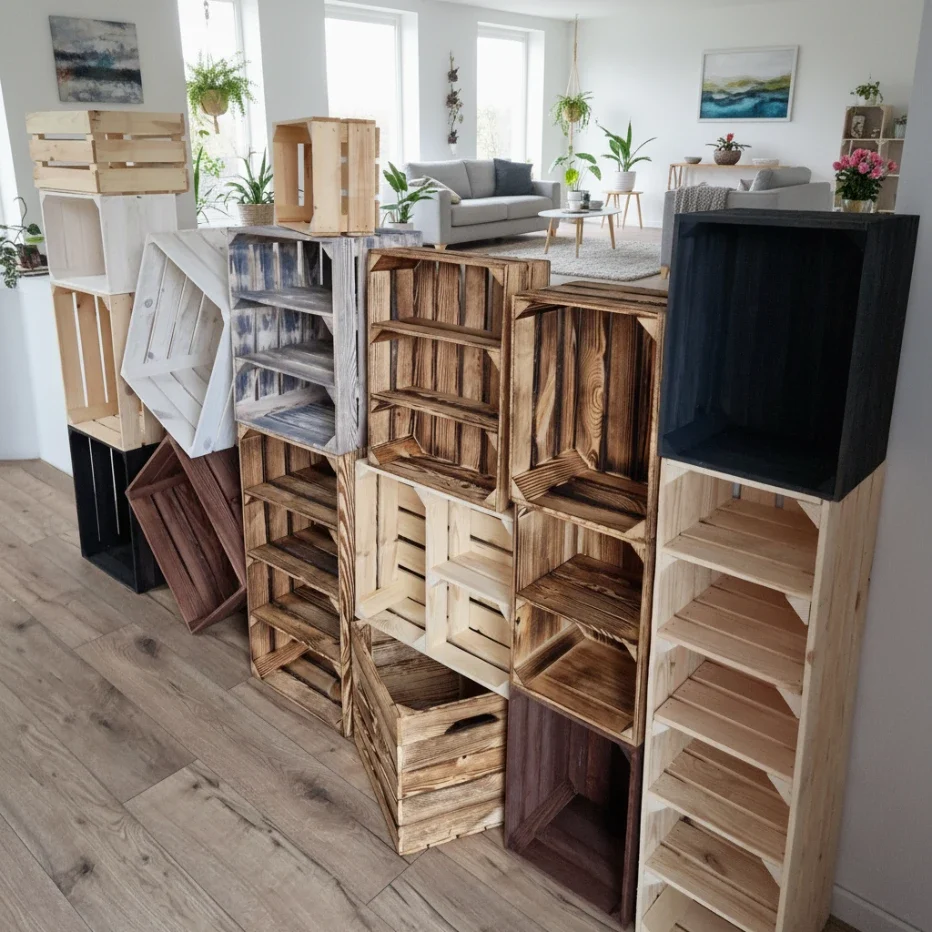
Which wooden crate should you choose when, at first glance, they all look pretty much the same? Four sides, a base, a bit of pine wood – and yet just a few centimetres can decide whether the crate fits on the shelf in your wardrobe, slides into a compartment in your shelving unit and holds your winter jumpers, or just a few jars. Then there’s the finish, the accessories, and the question of how many crates you actually need.
This guide is your map through our entire range. We’ll go through sizes, finishes, versions with shelves, lids and handles, ready-made shelving units, typical uses, and how to calculate the number of crates you need for a shelving unit. We’ll also be honest about when something else is a better fit – for example, a used fruit crate or a simple plastic box.
We’ve been making crates since 2016 in our family workshop and the questions we hear most often are: “Which size?”, “Burnt or natural?”, “How many do I need for a shelving unit?”. We’ve collected the answers in one place so you can choose at your leisure and without any guesswork.
Size – where your choice begins
Size is the most important decision, because you can always choose a finish to match your décor, but a crate that’s too small will never get any bigger. Before you order, grab a tape measure and measure the space where the crate will go: the shelf, the alcove, the space under the bed or the corner by the fireplace. Leave a few centimetres of space on each side – wood isn’t cardboard, you can’t just force it in.
The second point is depth. In a wardrobe, it’s important that the crate doesn’t stick out over the edge; on the floor, that it doesn’t get in the way. Below you’ll find an overview of all our sizes so you can compare them directly.
| Dimensions (cm) | What fits inside | Most common uses | Price from |
|---|---|---|---|
| Dimensions (cm)30×20×15 | What fits insideSpices, cosmetics, office supplies, chargers, a few jars | Most common usesKitchen, bathroom, desk, small gift hamper | Price fromfrom €6.90 |
| Dimensions (cm)35×25×19 | What fits insideTowels, remote controls and magazines, toddler toys, vegetables | Most common usesCupboard compartments, hallway, pantry | Price fromfrom €9.90 |
| Dimensions (cm)39×29×24 | What fits inside3–4 pairs of shoes, books, toys, jumpers, preserves | Most common usesShelving unit made from crates, “apple crate” for everything | Price fromfrom €10.90 |
| Dimensions (cm)33×33×38 | What fits insideClothes, toys, documents, folders | Most common usesIKEA KALLAX shelving unit compartments | Price fromfrom €32.90 |
| Dimensions (cm)60×40×20 | What fits insideFlat items: bedding, board games, shoes under the bed | Most common usesUnder the bed, under the desk, on low shelves | Price fromfrom €9.90 |
| Dimensions (cm)50×40×30 | What fits insideFirewood, blankets, toys, seasonal items | Most common usesLiving room, children’s room, garage, cellar | Price fromfrom €10.90 |
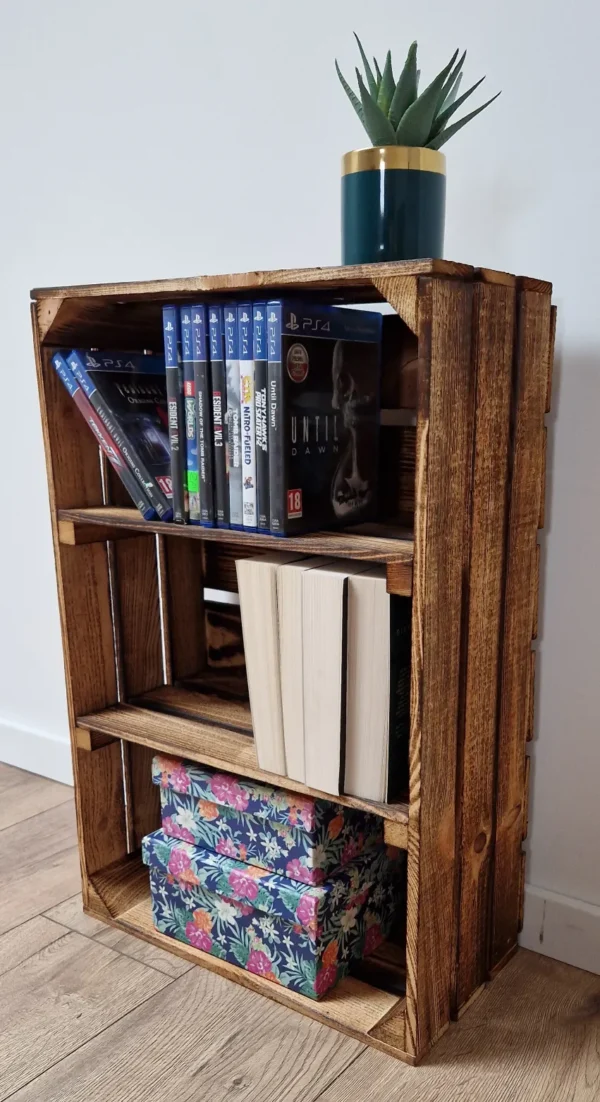
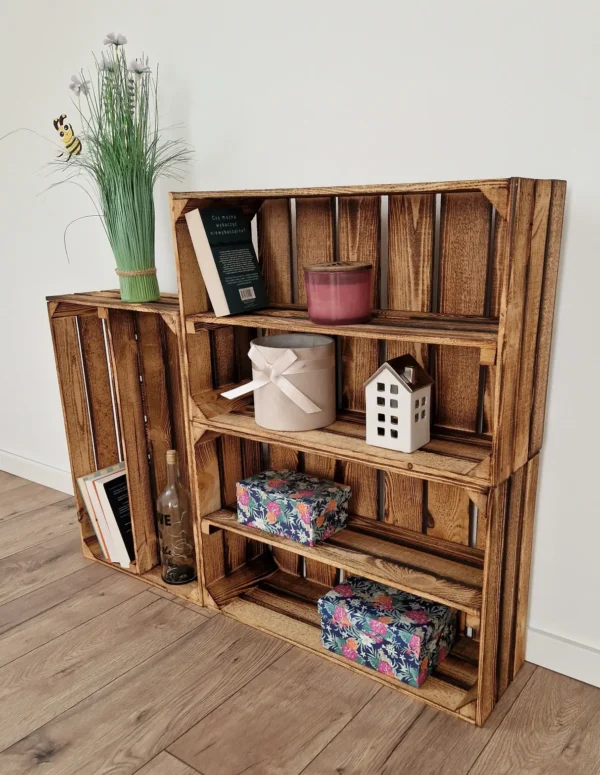
| Dimensions (cm)67×37×28 (with shelves) | What fits insideBooks, plants, decorations, shoes | Most common usesReady-made shelving unit or shelving module | Price fromfrom €20.90 |
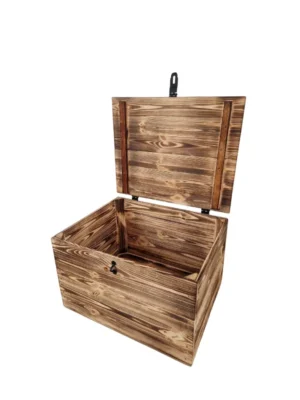
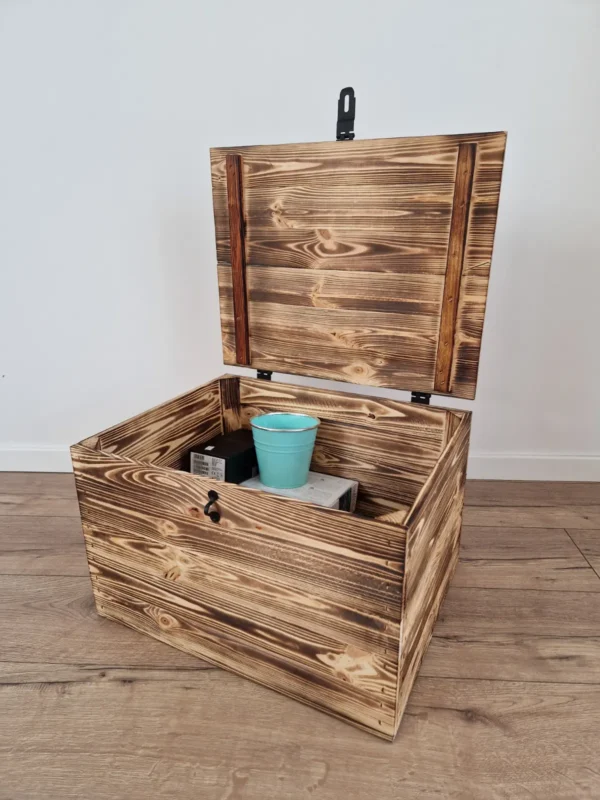
| Dimensions (cm)75×40×30 (chest with lid) | What fits insideBedding, duvets, winter clothes, toys | Most common usesChest at the foot of the bed, seat, long-term storage | Price fromfrom €57.90 |
Wooden crate 40×30 – the classic “apple crate” size
If you’re searching for “crate 40×30” or “apple crate dimensions”, you probably mean the format that’s been standard in Germany for decades: roughly 40×30 cm base. Our version measures 39×29×24 cm, and this is exactly the model most customers choose – simply because it’s the most versatile.
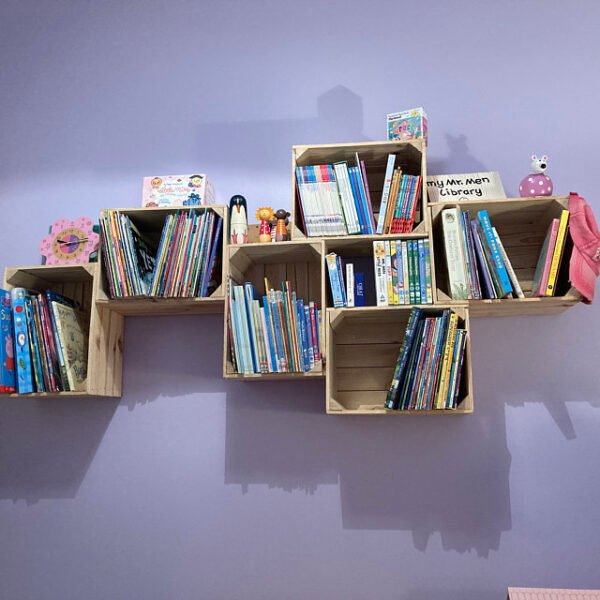
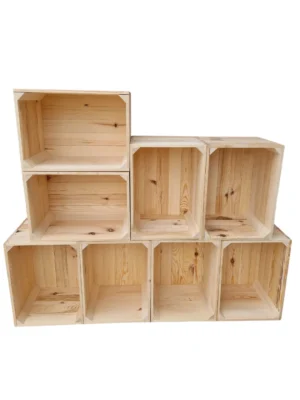
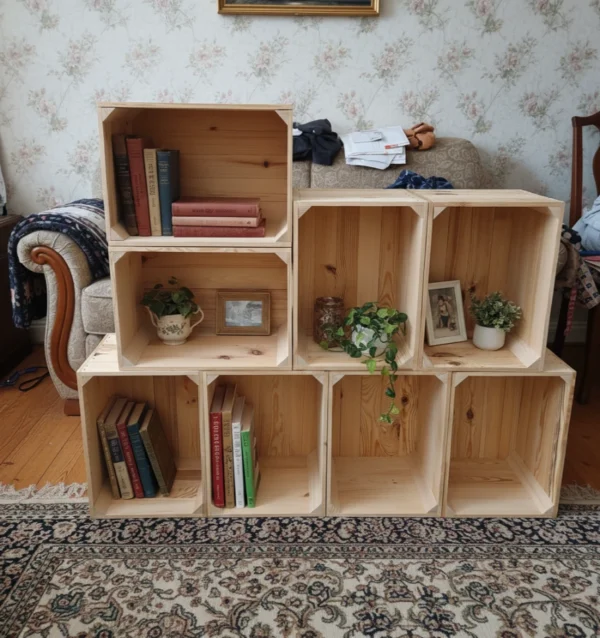
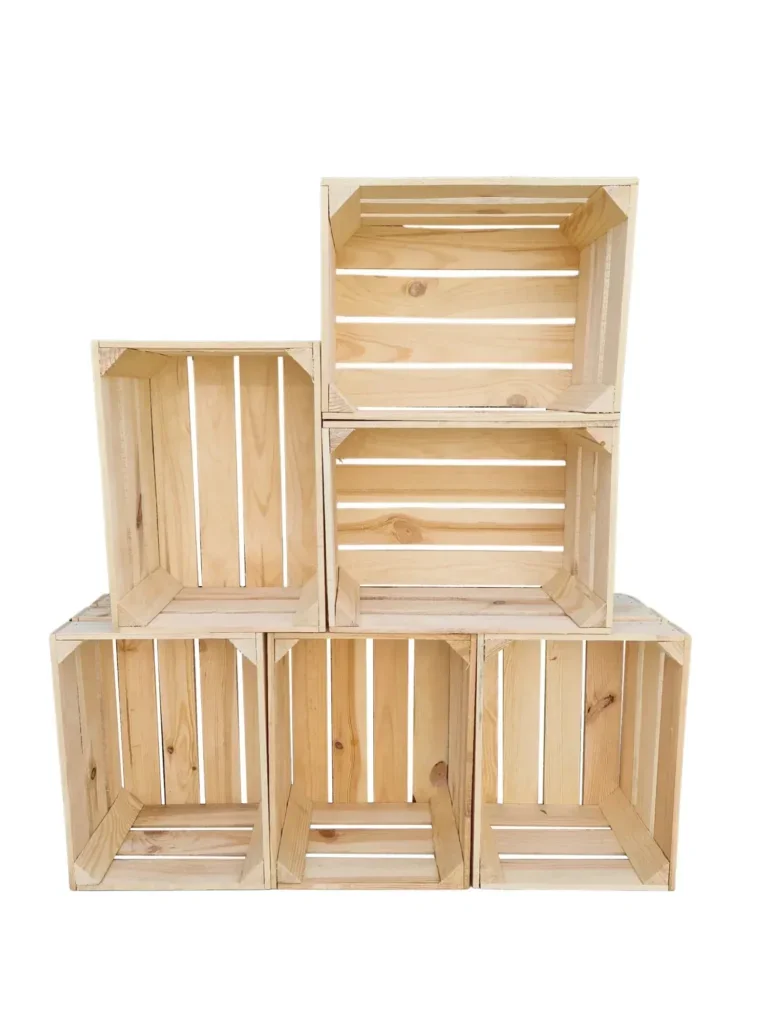
The classic wooden crate 39×29×24 cm holds 3–4 pairs of shoes, a dozen or so books, or all your winter hats and scarves. Stood on its side, it becomes a shelf compartment, and several of these crates make a shelving unit in any arrangement you like. If you’re not sure where to start – start with this one.
Small wooden crate – when less is more
A small wooden crate is a great choice wherever you want to keep small things tidy. Small crates 30×20×15 cm are perfect for spices, cosmetics or cables, and as a gift hamper they’ll hold a jar of honey, caramel sweets and a good fruit brandy. The slightly larger crates 35×25×19 cm fit on a standard cupboard shelf and hold rolled towels or a supply of potatoes and onions in the pantry.
To be honest: for individual small items like paperclips or jewellery, even the smallest crate is too big. For that, an organiser with compartments or a small drawer is better. The crate comes into its own for groups of things you want to keep handy in one place.
Large wooden crate – for everything you have lots of
A large wooden crate is practical wherever a normal box quickly reaches its limits. The burnt crate 50×40×30 cm holds plenty of logs, sofa blankets or a whole collection of building blocks. The crate 60×40×20 cm is lower and longer – ideal under the bed, under the desk or on the bottom shelf.
The largest model in the range is the solid chest with lid 75×40×30 cm. It’s more a piece of furniture than a container: at the foot of the bed it holds bedding and duvets, in the hallway it serves as storage and a seat. If that’s exactly what you’re after, take a look at our guide to choosing a wooden bedding chest.
Crates for KALLAX – made to fit a specific shelving unit
A compartment in the popular IKEA KALLAX shelving unit measures about 33×33 cm with a depth of around 38–39 cm. Our crates for the KALLAX shelving unit 33×33×38 cm are made exactly to this size, so they slide in like drawers. If you have one of these units at home, you’ll find all the details in our dedicated guide to boxes for KALLAX.
Crates in the most popular sizes
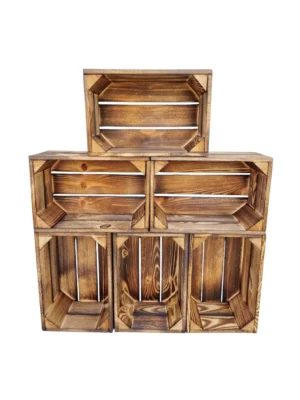
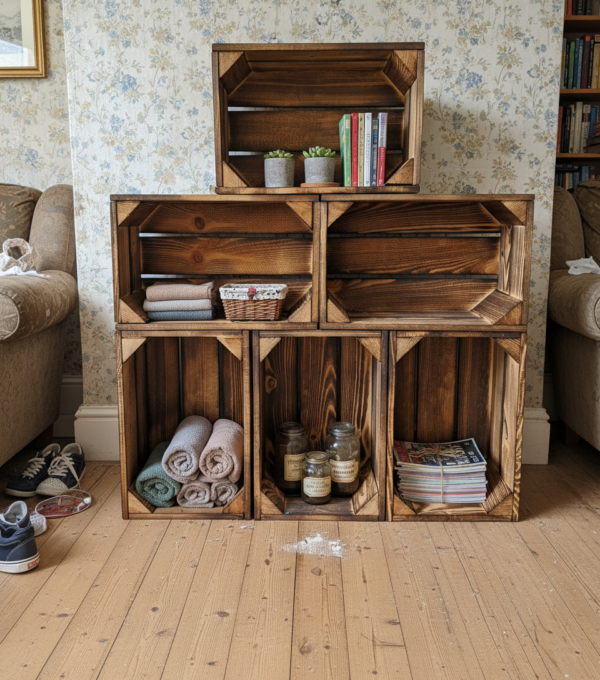


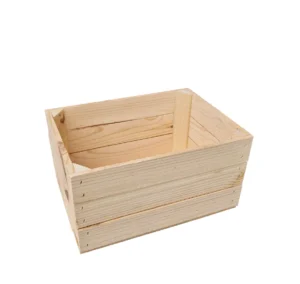
Finish: natural, burnt or coloured
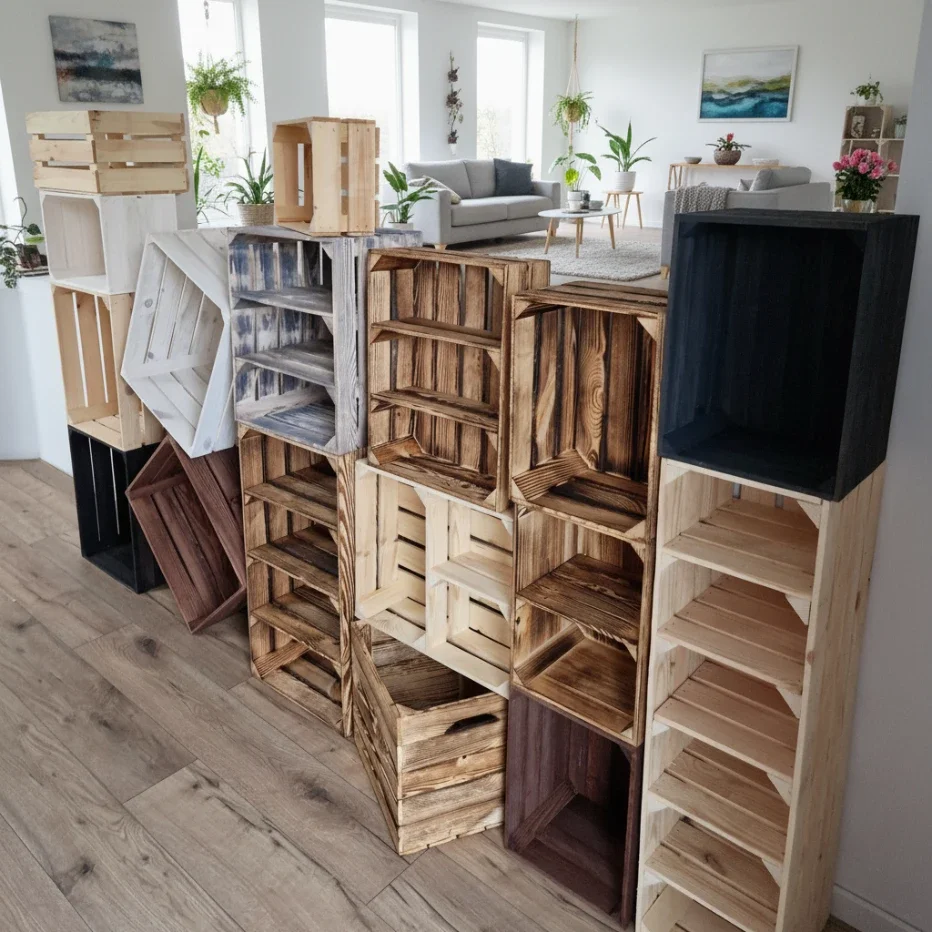
Once you’ve chosen the size, it’s all about the look. All our crates are made from pine, but the finish changes their character so much that the same crate can suit completely different interiors. The question “Burnt or natural?” is probably the one we hear most often – so here’s a clear answer.
| Finish | Look and character | Goes with | Good if … |
|---|---|---|---|
| FinishNatural | Look and characterlight, sanded pine, subtle grain, light appearance | Goes withScandinavian, minimalist rooms, bright children’s rooms | Good if …you want to brighten a room or paint or oil the crate yourself |
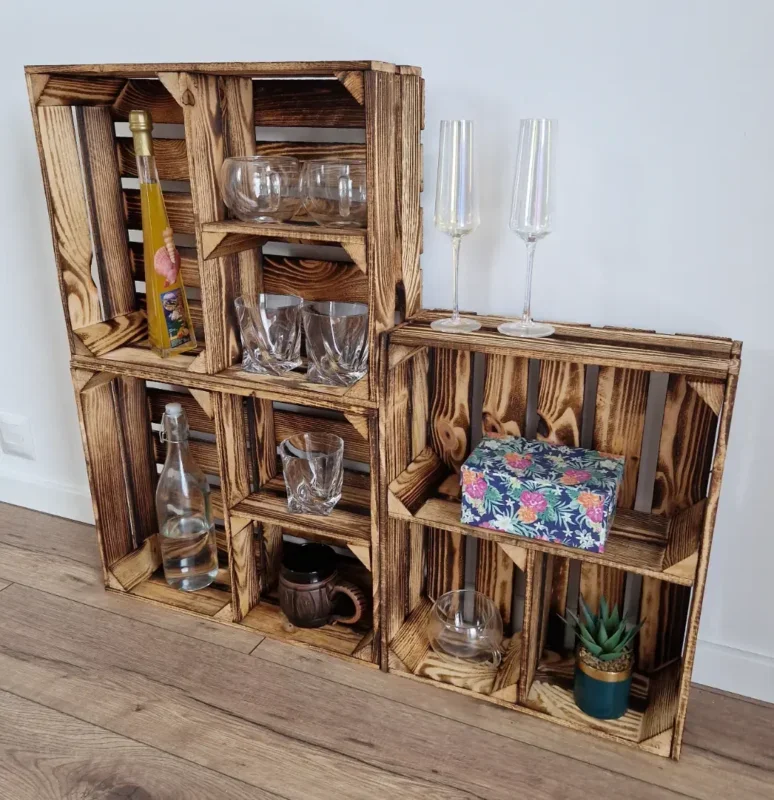
| FinishBurnt | Look and characterdarker, warm brown, pronounced grain, rustic effect | Goes withrustic, loft and industrial interiors, by the fireplace, country style | Good if …you like wood with character and want the crate to be a real eye-catcher |
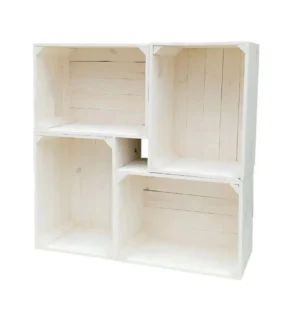
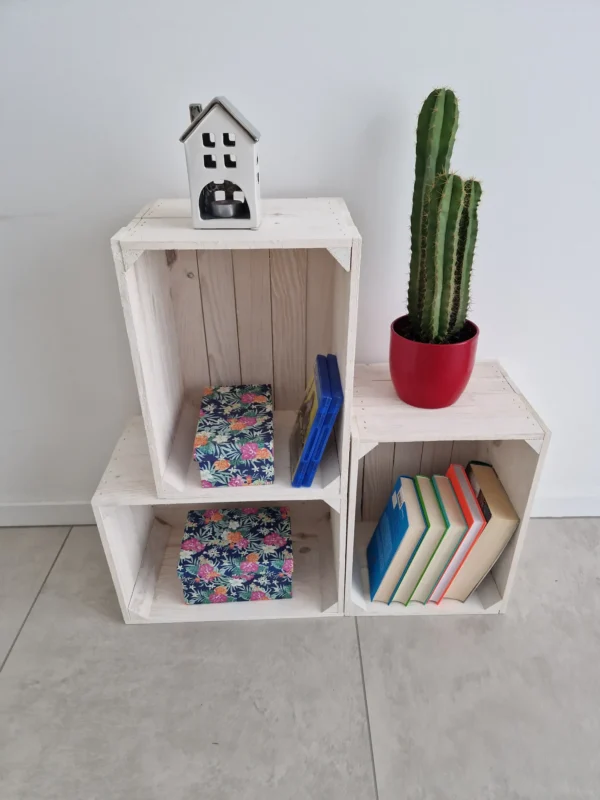
| FinishColoured (e.g. white, brown) | Look and characteropaque colour, calm, uniform surface | Goes withwhite kitchens and bathrooms, Provence style, shabby chic, children’s rooms | Good if …the crate should blend in with the furniture or provide a splash of colour |
Natural crate – light and neutral
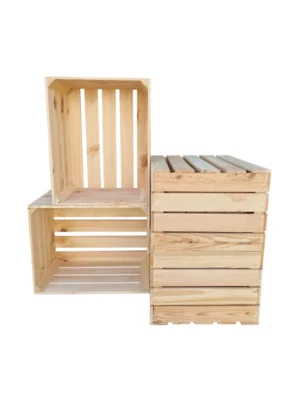
Natural pine is the safe choice if you’re not sure how the crate will look in your room. It’s light, has a warm tone and doesn’t dominate the space. Over time, the wood darkens slightly and takes on a honey colour – this is completely normal and is part of the charm of pine for many people.
Another advantage of the natural crate: it’s a “blank canvas”. You can oil, stain or paint it with chalk paint if you change your wall colour next year. Untreated crates 50×40×30 cm are often chosen by people who like to customise things to their own taste.
Burnt crate – warm and rustic
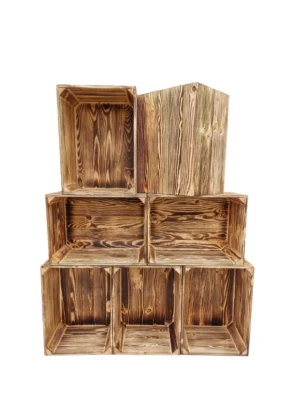
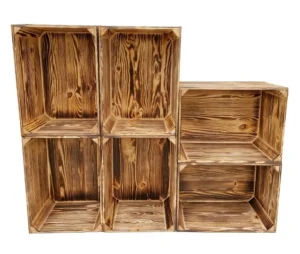
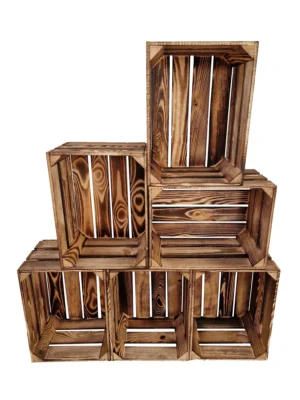
Burning brings out the grain: softer areas darken more, harder ones stay lighter, so every board has its own unique pattern. Such a crate instantly looks as if it’s “from an old house”, even though it’s new and cleanly made. That’s why burnt crates look so good by the fireplace, in a living room with wooden floors or in a country kitchen.
Good to know: no two burnt crates are ever exactly the same colour. If you want a completely uniform colour in a large shelving unit, consider the natural or a coloured version.
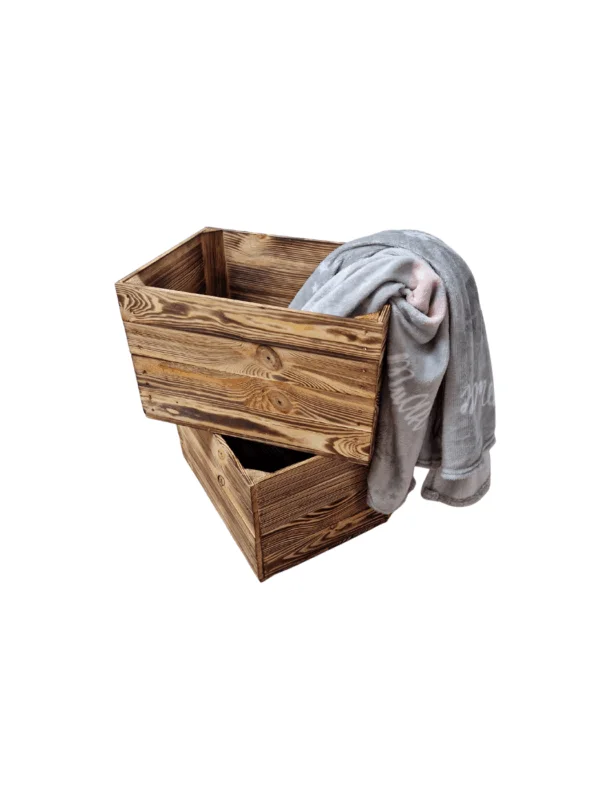
White and coloured wooden crates
White wooden crates look great in bright kitchens, bathrooms and children’s rooms, where raw wood might seem “too heavy”. In the coloured crates category you’ll find, among others, the classic 39×29×24 cm format in white and brown. White goes well with burnt shelving compartments – this contrast looks light and warm at the same time.
Natural, burnt and coloured

Extras: shelf, lid, rope, handles and ready-made shelving units
A simple crate is the basis, but sometimes it’s worth spending a little more on a version that does exactly what you need straight away. Here’s what the different extras offer and when they make sense.
Crate with shelf and compartments
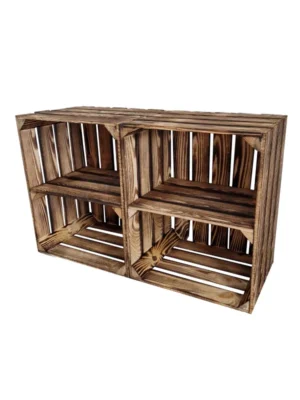
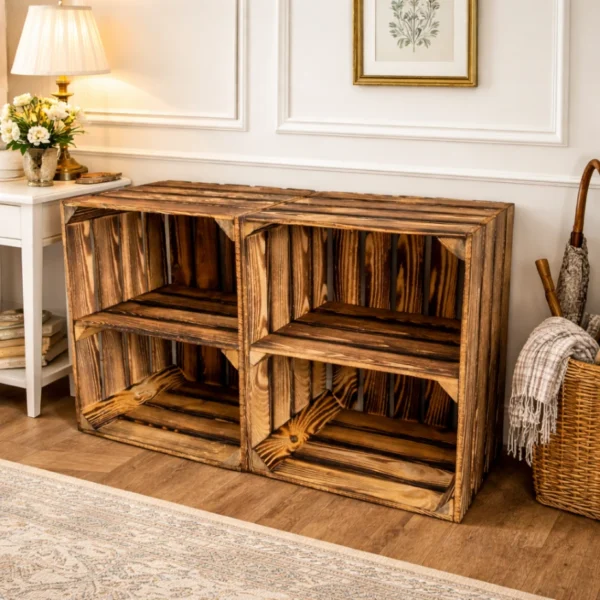
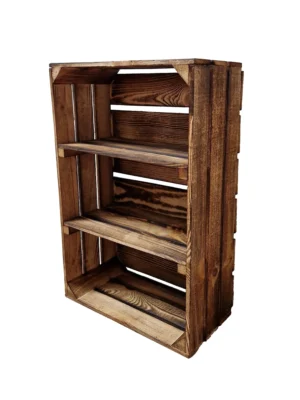
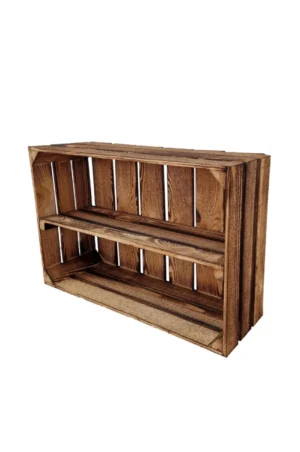
A wooden crate with compartments, i.e. with a built-in shelf, divides the interior into two levels. Heavier items go on the bottom, and small things, books or plants on top – without a pile you have to dig through from the bottom. The crate with shelf 50×40×30 cm can be stood on its side to make a small bedside table or bathroom shelf.
If you need more levels, check out the large crates with shelves 67×37×28 cm. Several of these modules already make a proper shelving unit for books or decorations. You’ll find the full range in the crates with shelves category.
Wooden crate with lid
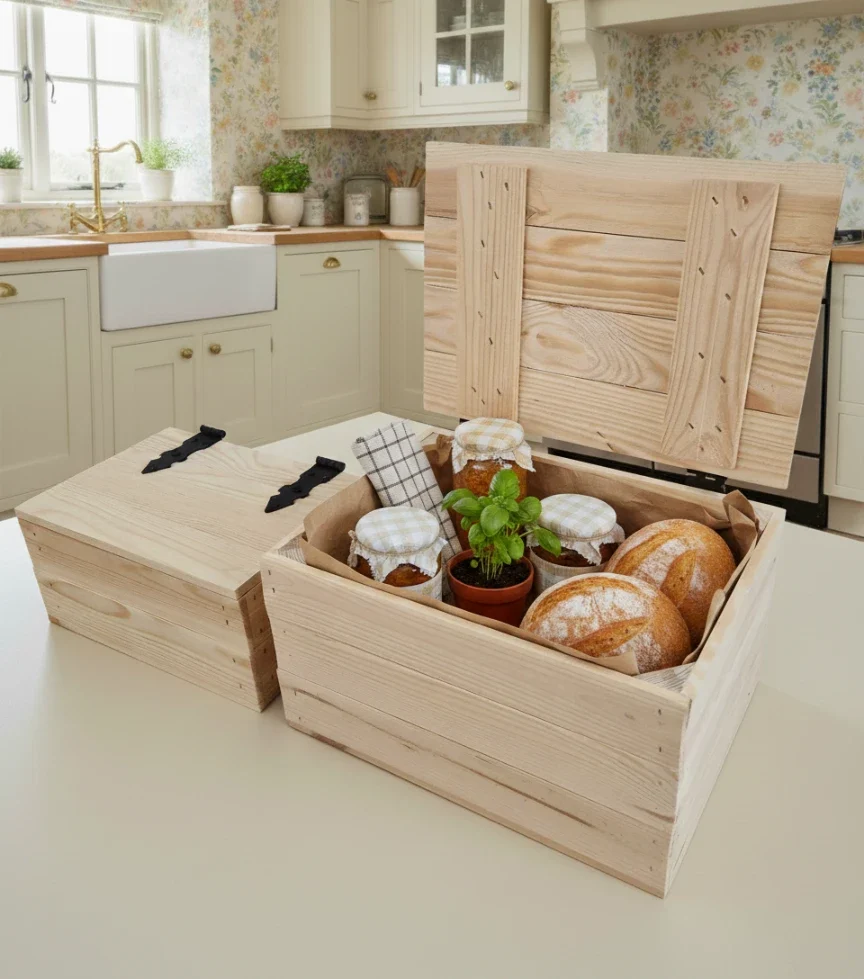
A lid protects the contents from dust and hides away what you don’t want on show – documents, toys, supplies or winter clothes. With a lid, the crate can also serve as a side table or seat. The crate with lid 39×29×25 cm is a good size for keepsakes or as a “treasure chest” for a child, and the crate with lid and lock 50×40×30 cm is ideal as an elegant gift chest or for things you don’t need every day.
Bear in mind that a crate with a lid is less practical if you need to get into it several times a day. For shoes in the hallway or toys your child is always getting out, an open version is better.
Crate with rope and handles
Handles made from thick rope make carrying easy. When the crate is full of wood, potatoes or toys, it’s much easier to grab and lift by the rope than by the edge. Crates with rope handles 50×40×30 cm usually end up by the fireplace – you can read more in our article on choosing a firewood basket.
Wooden crate on castors
We don’t sell castors separately or fit them at the workshop. But if you want a crate on wheels, for toys or under the bed, you can simply screw standard furniture castors from a DIY shop to the base. Choose castors to suit your floor and the weight of the contents, and screws that won’t go through the base.
Ready-made shoe and book shelving units
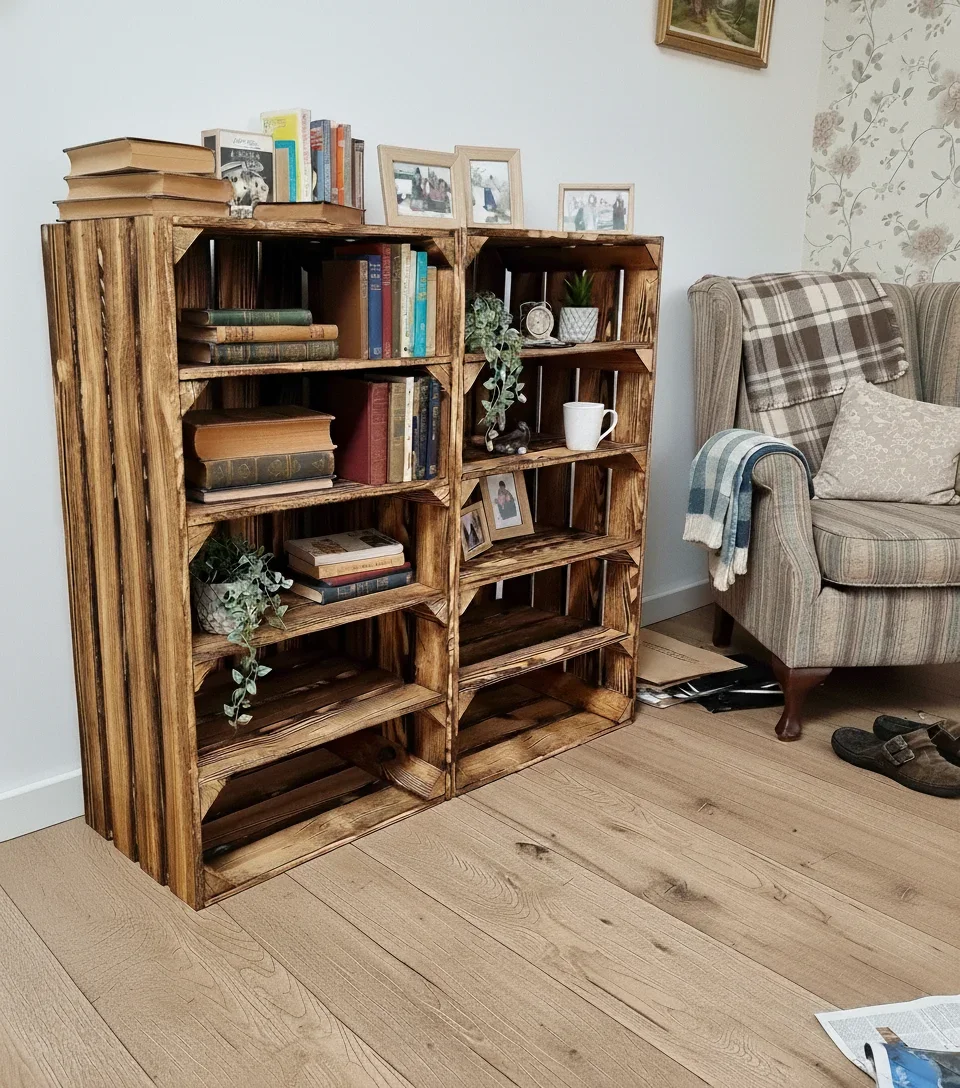
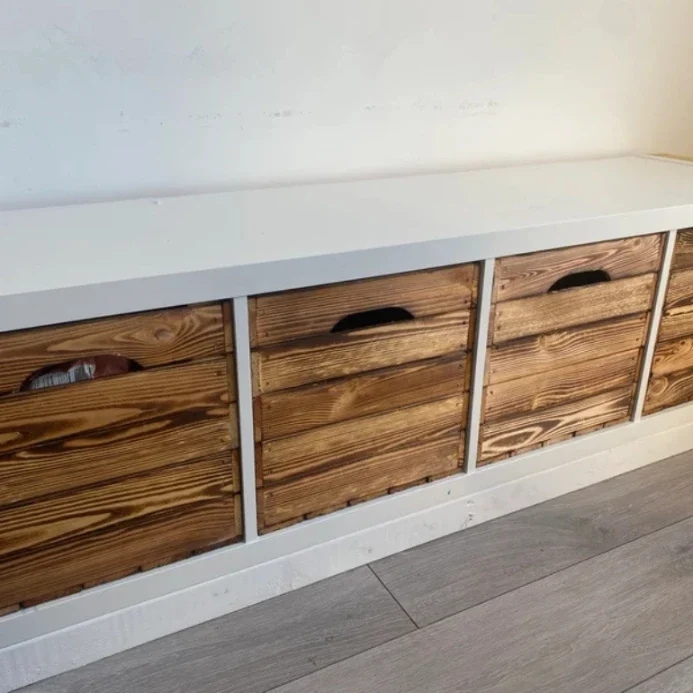
If you don’t want to put a shelving unit together yourself, choose a ready-made construction. The shoe rack made from crates in the form of a bench is ideal for the hallway – you can put your shoes on it, and sit on top to tie your laces. The bookcase made from crates 95×30×27 cm is a quick way to your own little home library – no drilling or screwing required.
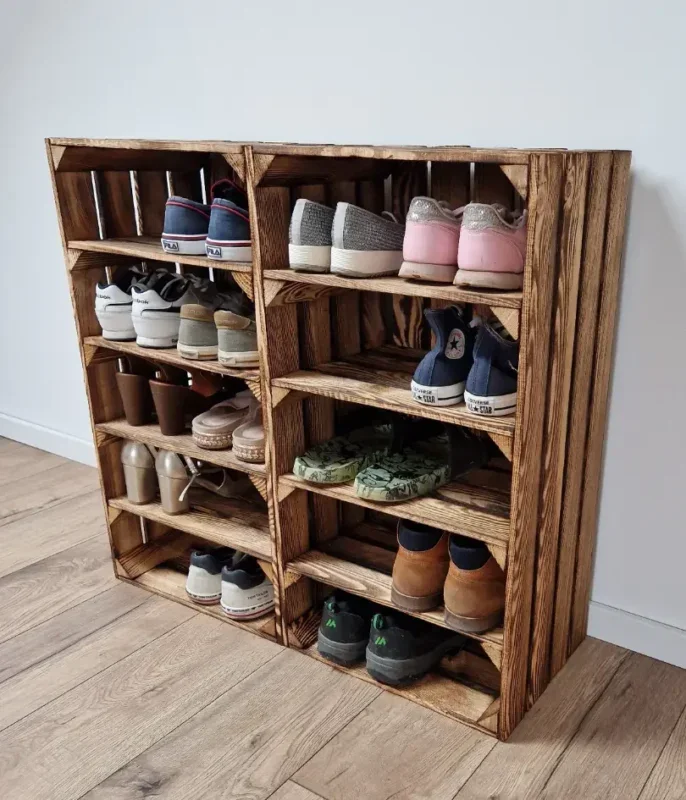
With shelf, with lid and ready-made shelving units
What will you use them for? The right crate for every job
The easiest way to make a good choice is to start with how you’ll use it, not the product itself. Think about exactly what you want to put in the crate, where it will go and how often you’ll need to get into it. The following table sums up the most common scenarios.
| Use | Recommended crate | Why |
|---|---|---|
| UseWood for fireplace, wood burner or stove | Recommended crate50×40×30 with rope handles or burnt 50×40×30 | Whyspacious, sturdy, easy to carry – see our firewood basket guide |
| UseShoes in the hallway | Recommended crate39×29×24 or ready-made shoe bench | Whyone crate holds 3–4 pairs, more modules can be added easily |
| UseBooks and decorations | Recommended crate39×29×24, crates with shelves 67×37×28, shelving unit 95×30×27 | Whysturdy modules that can be arranged into a shelving unit any way you like |
| UseToys | Recommended crate50×40×30 or 60×40×20 (under the bed) | Whylarge capacity, children can throw toys in and get them out themselves |
| UseBedding, duvets, winter clothes | Recommended crateChest with lid 75×40×30 | Whythe lid protects from dust – more in our bedding chest guide |
| UseKALLAX shelving unit | Recommended crateCrates 33×33×38 | Whysize fits compartment of about 33×33 cm |
| UseGift hamper | Recommended crate30×20×15 or 35×25×19, for larger gifts 50×40×30 with lid | Whythe crate will last the recipient for years – ideas in our gift hamper article |
| UseKitchen, pantry, preserves | Recommended crate35×25×19 or 39×29×24 | Whyholds jars of pickles and jam as well as vegetables; well ventilated |
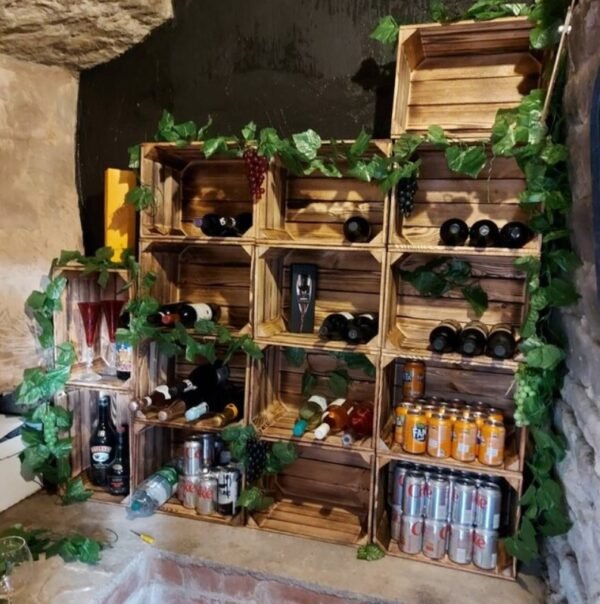
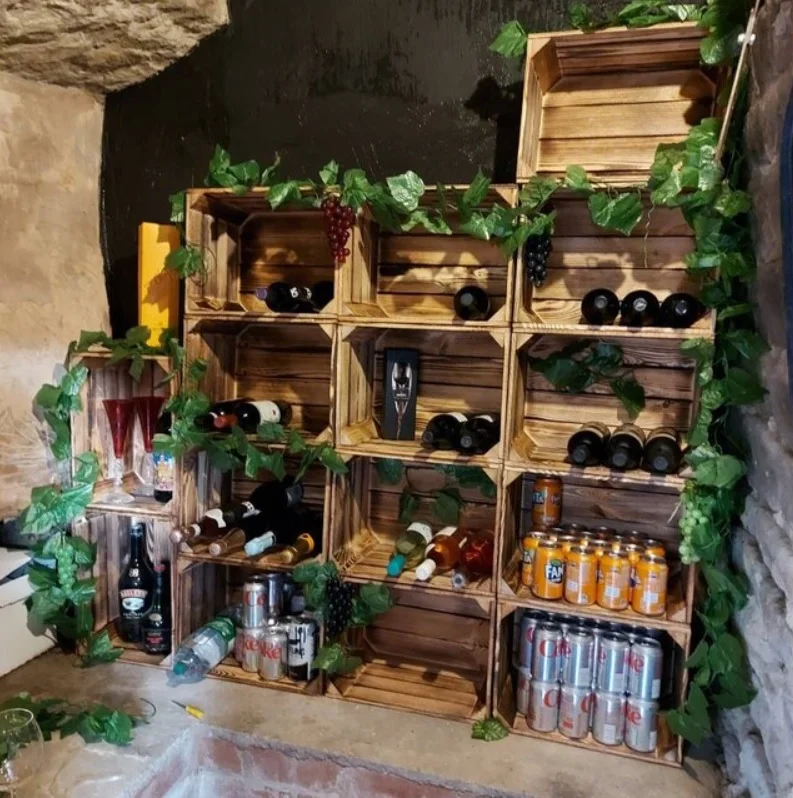
| UseWine and liqueurs | Recommended crate39×29×24 stood as a shelving unit or crates with shelves | Whythe bottles lie safely, and the shelving unit looks like a small wine cellar |
| UseGarage, workshop, cellar | Recommended cratenatural 50×40×30 | Whyspacious and robust, can be labelled or painted |
If you want to tidy up not just one corner but your whole house, our more comprehensive guide to choosing wooden storage boxes for different rooms will help. There you’ll find a comparison of wooden crates with baskets, boxes and plastic containers.
When a wooden crate isn’t the best choice
Not every job is right for wood. In a damp cellar where you want to store something for years, a plastic container with a seal will protect the contents better from moisture. The same goes for the freezer, an uncovered balcony, or for storing wet items – a wooden crate isn’t a good idea here.
It’s similar with very small items – screws, beads or cables are best kept in an organiser with compartments, and then put that in the crate. Wood is best where looks, convenience and easy access to everyday items matter.
How many crates do you need for a shelving unit?
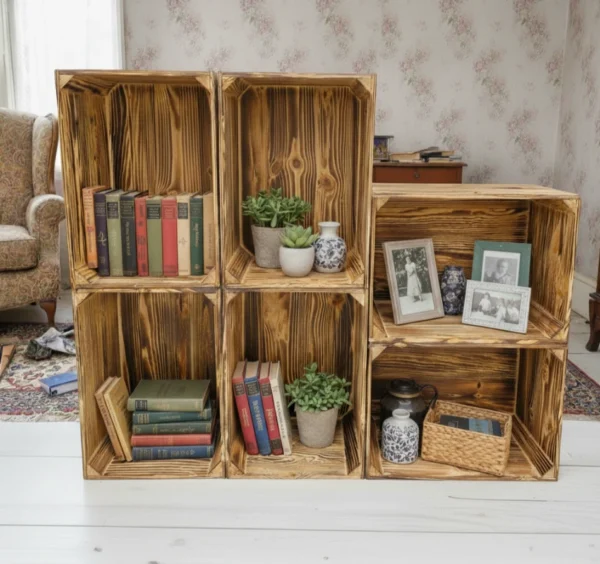
How many crates you need for a shelving unit depends on how high and wide you want the furniture to be and how you arrange the crates. The classic crate 39×29×24 cm, stood on its side with the opening at the front, is about 29 cm high and 39 cm wide. Four of these crates stacked make a shelving unit about 116 cm tall.
In practice, 3–4 crates on top of each other work best. Such a shelving unit is stable, easy to reach and doesn’t overwhelm the room. Taller constructions are possible, but then fixing to the wall isn’t just an option – it’s a must.
Example arrangements
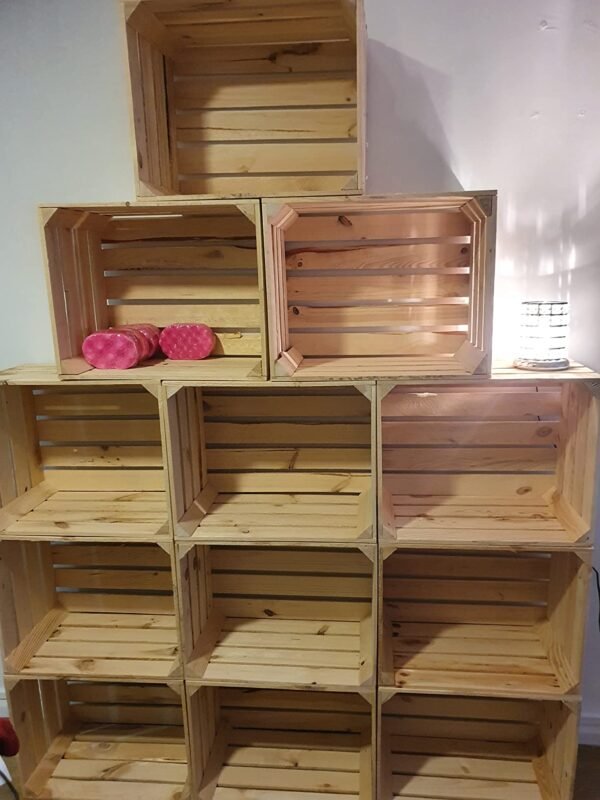
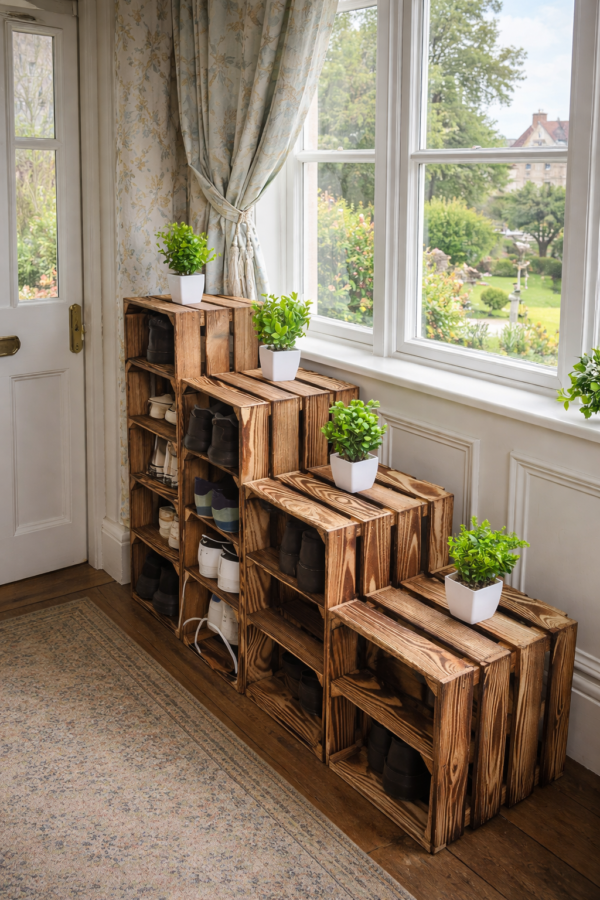
- Low shelving unit under the window – 3 crates side by side in a row. Plants or a lamp can go on top.
- Shelving unit in the hallway – 2 columns of 3 crates each, so 6 in total. Shoes at the bottom, hats and gloves at the top.
- Bookcase – 3 columns of 3 crates each, so 9 in total. It looks like a real piece of furniture and costs less than many ready-made shelving units.
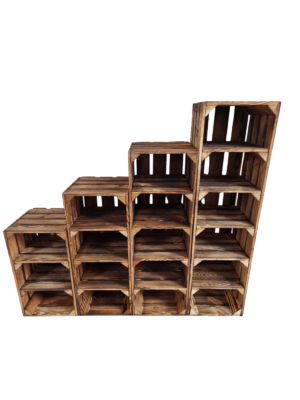
- Shelving wall – 4 columns of 4 crates each, so 16 in total. Here you must fix the construction to the wall.
Staggered arrangement and connecting the crates
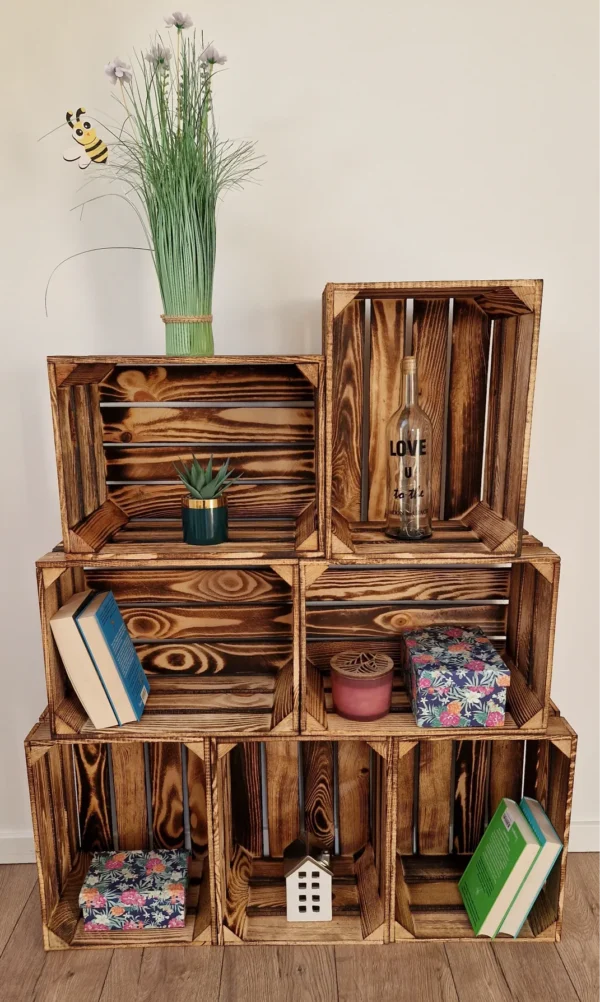
A staggered arrangement, where each higher row is offset by half a crate – like bricks in a wall – looks more interesting. You can also mix up the orientation: some crates upright, some sideways, and some with the opening at the top as “baskets”. This gives a relaxed, modular look.
To stop the shelving unit coming apart, connect the crates from the inside with short screws through the adjoining side panels. Choose screws that don’t stick out on the outside. You can also use small flat brackets or furniture angles, screwed on from the back, to connect them.
New or used fruit crates?
Many people wonder if it’s enough to get used apple crates from a fruit grower or the market. To be honest – sometimes it is. Used crates are often cheaper, and for the garage or allotment they can be perfectly adequate.
But you do have to accept their drawbacks. Crates that have spent a season on the orchard and in the cold store are often dirty, stained with fruit juice, splintery, with protruding nails and uneven boards. Before they’re fit for the living room or children’s room, they need to be thoroughly cleaned, dried and sanded, and loose boards often need to be nailed back in place. That means several hours’ work per crate.
Our crates arrive ready to use: sanded, even, no assembly required and ready to use in your home. You pay more than for a crate from the market, but you save time and can be sure they all look the same. If price is your main concern and you don’t mind the work, used crates can be a sensible option. But if the crate will be on show, you’re better off with new ones.
How our crates are made, their durability and care
We’ve been making crates since 2016 in our family workshop and ship them from our warehouse. We use pine – light yet sturdy, with a beautiful, pronounced grain. The boards are sanded so the surface feels smooth and the edges don’t catch on your clothes.
The burnt versions are also flamed, which darkens the wood and brings out the grain. Every crate is a little different – that’s a natural feature of wood, not a flaw. All crates are shipped ready to use, no assembly required. Shipped with DHL throughout Germany, delivery time 2–3 working days. All details can be found under Shipping & Delivery.
Everyday care
- Remove dust with a dry or slightly damp cloth – don’t soak the wood.
- Don’t place the crate right next to radiators, stoves or fireplaces – too much heat dries out the wood.
- If you want to freshen up a natural crate, you can treat it with wood oil or protect it with wax.
- Small scratches in pine can easily be sanded out with fine sandpaper.
Indoors or outdoors?
Our crates are primarily intended for indoor use: living room, bedroom, kitchen, hallway, garage or dry cellar. Outdoors, on the terrace or balcony, untreated pine will turn grey over time, and prolonged contact with rain isn’t good for it.
If you want to use a crate outdoors, for example as a plant pot, protect it with an outdoor wood preservative or oil and keep it under cover. Don’t place it directly on wet soil or grass – put a few battens or slabs underneath so the base can dry out.
How to order
Ordering is simple and only takes a few minutes:
- Choose the size – if you’re unsure, measure your space and compare it with the table above.
- Choose the finish: natural, burnt or coloured (where available).
- Add the crates to your basket – if you’re building a shelving unit, work out how many you’ll need.
- All information about shipping and delivery can be found on the Shipping & Delivery page.
The crates arrive ready to use and require no assembly – just unpack and set up. If you have questions about sizes, finishes or larger quantities, contact us via the Contact page. If the crate is a gift and you’re not sure which size to choose, you can also give a gift card, which is sent by email.
Frequently asked questions
If you don’t have a specific use in mind, start with the classic crate 39×29×24 cm. It’s the most versatile size – suitable for shoes, books, toys and as a shelving module. If it works for you, you can easily buy more crates later. On fruit farms, a crate with a base of about 40×30 cm is standard. Our version measures 39×29×24 cm and matches this classic format – but is sanded and ready to use in your home. Neither is better, they just have different characters. The burnt one is darker, with pronounced grain, and suits rustic and loft interiors. The natural one is light, neutral and easy to paint – it goes well with Scandinavian style. For a low shelving unit, 3 crates are enough, for a hallway unit 6, and for a bookcase 9 (3×3). The most practical is 3–4 crates on top of each other; taller constructions should be fixed to the wall. No. The crates arrive ready to use and require no assembly. If you’re building a shelving unit, you should just connect them with short screws and fix taller constructions to the wall. Our crates are primarily intended for indoor use. Outdoors, you should protect them with an outdoor wood preservative or oil, keep them under cover and not place them directly on wet ground. We don’t sell castors separately, but you can simply screw standard furniture castors to the base yourself. Choose ones suitable for your floor and the weight of the contents, and screws that won’t go through the base.Which wooden crate should I start with?
What are the dimensions of an apple crate?
Burnt or natural crate – which is better?
How many crates do I need for a shelving unit?
Do the crates need to be assembled?
Can I use a crate outdoors?
Can a wooden crate have castors?
Conclusion: size first, then character
A good crate is one that fits the space and what you want to store in it. Start with your tape measure and what you’ll use it for, then choose the finish and finally the extras – shelf, lid or handles. If you’re still unsure: the classic crate 39×29×24 cm almost never disappoints.
You’ll find all models in one place in the all wooden crates section. Take your time, compare the sizes with the table in this guide – and if anything’s unclear, just drop us a line.

He knows pine wood inside out: dimensions, load capacity, finishes and care. He writes our buying guides and answers technical questions.
All items by this author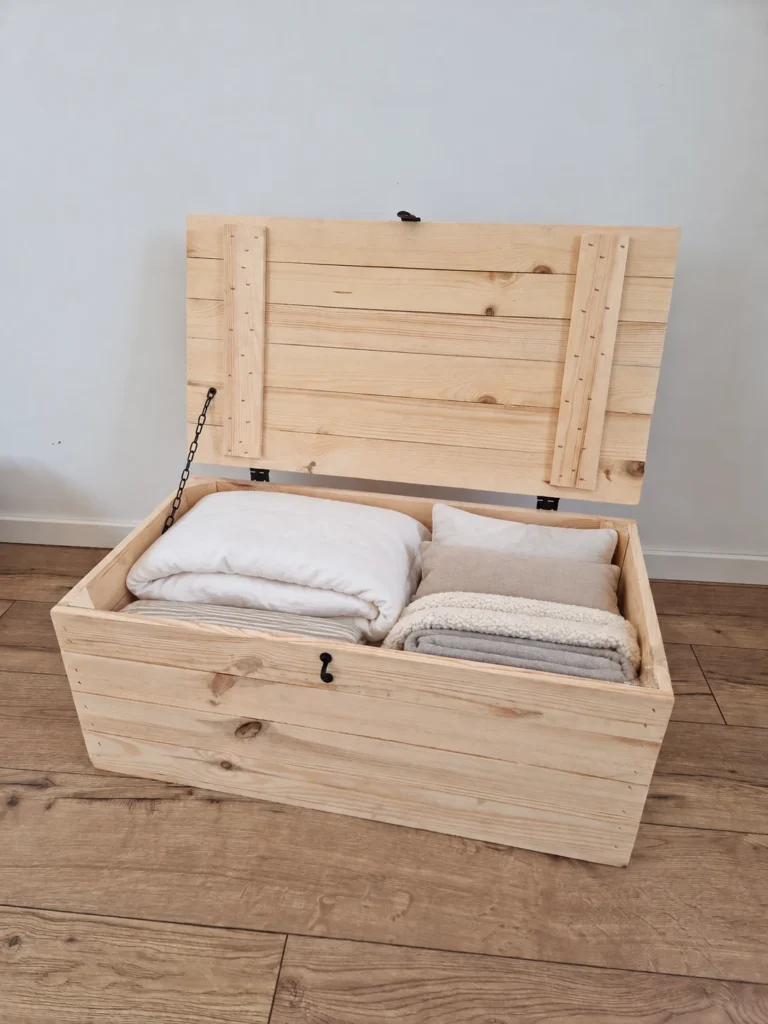








Add comment