
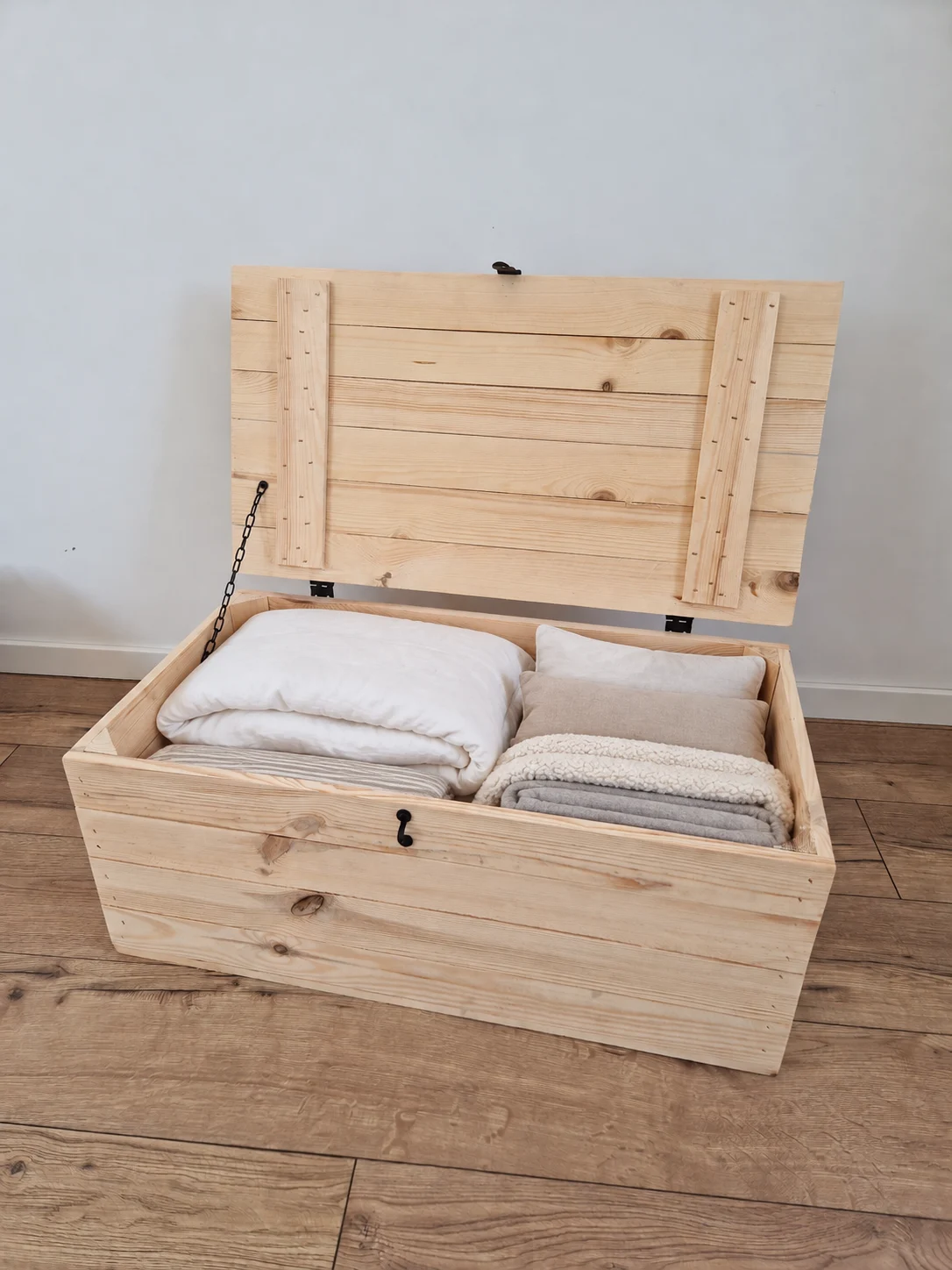
A bedding chest is the simplest way to stop spare duvets, summer bedding and guest blankets from taking up half your wardrobe. It sits at the foot of the bed, under the window or in the hallway, stores everything you don’t need every day, and can double up as a bench, bedside table or a place to put your folded bedspread. The problem: the term “bedding chest” covers a wide range of furniture – from a wooden chest to an upholstered storage bench or even a plastic box you slide under the bed.
In this guide, we give you an honest comparison of these solutions – including where a wooden chest isn’t the best choice. You’ll learn how to measure up, which chest length suits your bed width, the difference between solid wood and chipboard, and how to store bedding so it smells fresh after months in storage, not musty. At the end, there’s a short section on toy and blanket chests for children’s rooms.
We’ve been making chests and boxes from pine in our family workshop since 2016, and most questions about bedding storage reach us twice a year: in September, when the warmer duvets come out again, and in January, when it’s time to tidy up after the holidays.
What fits in a bedding chest?
Before you choose a particular model, take a quick look at what you actually want to store. You’ll need a different plan for a single spare set than for a winter down duvet, three pillows and two thick blankets. Duvets take up the most space – especially winter and down duvets, which stay nice and puffy even when folded.
The following figures are guidelines. A lot depends on the thickness of the filling, how you fold things, and whether the bedding is freshly washed (fluffier) or has been stored for a while. Treat them as a starting point, not a centimetre-perfect promise.
| Chest dimensions (external) | Approximate volume | What fits inside | Where it fits |
|---|---|---|---|
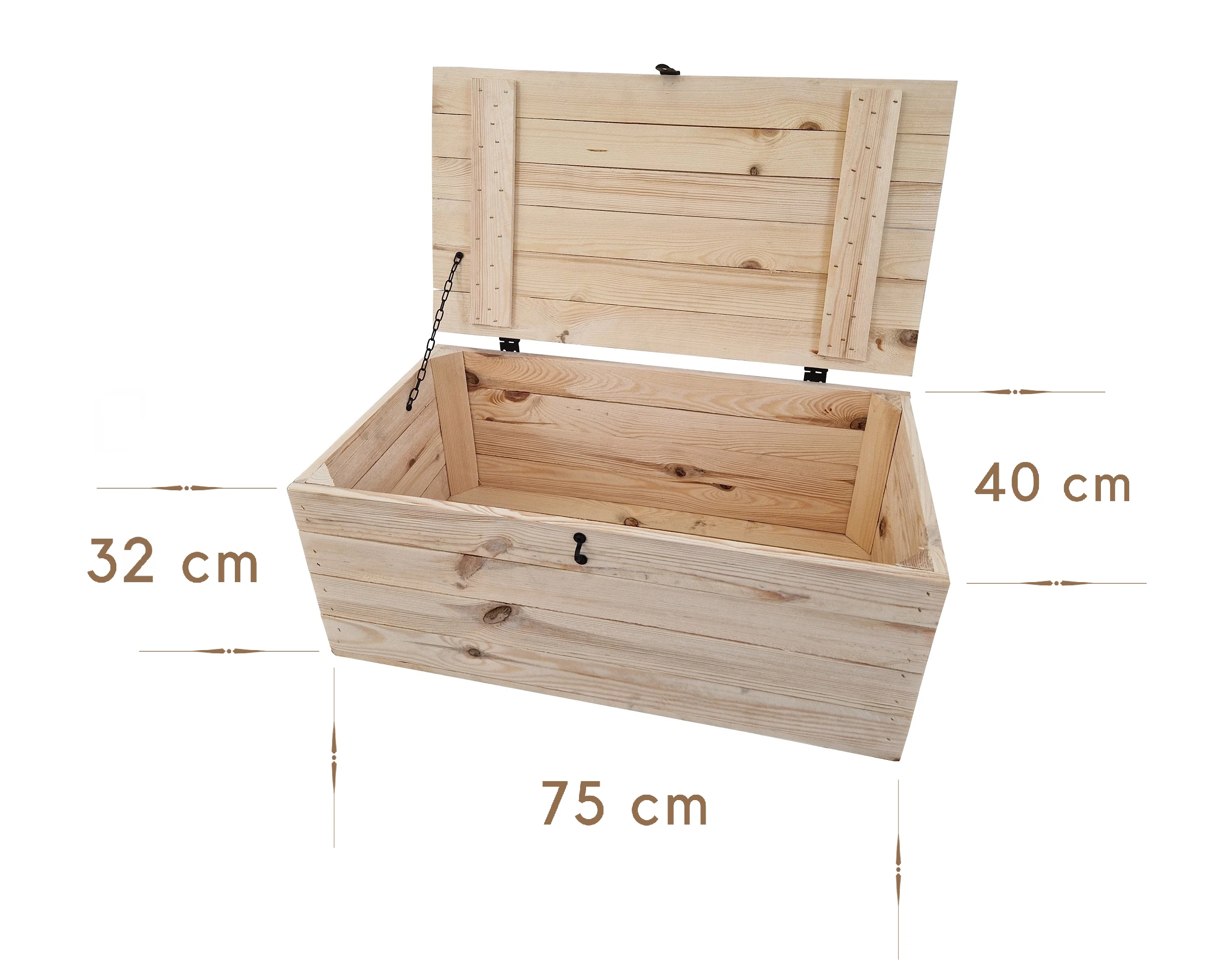
| Chest dimensions (external)75×40×30 cm | Approximate volumeapprox. 80–90 l | What fits insideAll-season duvet 160×200 and 2 pillows or 4–5 bedding sets and a blanket | Where it fitsat the foot of a 140–180 cm bed, under the window |
| Chest dimensions (external)50×40×30 cm | Approximate volumeapprox. 55–60 l | What fits insideSummer duvet or 2–3 blankets or 3–4 bedding sets | Where it fitsby a single bed, in the wardrobe, in the hallway |
| Chest dimensions (external)33×33×39 cm | Approximate volumeapprox. 40 l | What fits inside2 fleece blankets or guest pillows | Where it fitson a shelf, next to the bed, in the children’s room |
| Chest dimensions (external)39×29×25 cm | Approximate volumeapprox. 25–28 l | What fits insidePillowcases, sheets, towels, a small throw | Where it fitsin a wardrobe compartment, on a shelf, in the bathroom |
Some practical observations from households already using our chests:
- A winter down duvet can almost fill a large chest. If you want to store it with pillows, choose the largest size or two chests.
- Bedding sets need surprisingly little space – a folded cotton set is about the size of a thick book. They’re easy to store in smaller boxes with lids.
- Blankets and bedspreads are best rolled, not folded – that way you can take one out without disturbing everything else.
- Pillows are light but take up a lot of space. It’s often better to store them separately in a box with a square cross-section.
Types of bedding chests compared
There are four main types of storage solutions for bedding on the market. Each has its place, and none is the best for everyone. Below, we introduce them one by one and summarise everything in a table at the end of the section.
Chest or trunk chest made from solid wood
A classic wooden chest is simply a container with a lid, often with handles and a clasp. Solid wood is sturdy, copes well with being moved and carried, and develops character over the years – small scratches don’t spoil the look, they make it more natural. Wood “breathes”, so your bedding gets more air than in dense plastic.
The downsides? A solid wood chest is heavier than a plastic one, and a hard lid isn’t as comfy as an armchair. It’s a piece of furniture you’ll see – so it needs to suit your decor. That’s why we offer two finishes: natural and burnt.
Upholstered chest with seating surface
A bedding chest with a seating surface is usually made from chipboard, covered with fabric or faux leather, and has soft foam on the lid. Its biggest advantage is comfort – you can sit on it for longer, get dressed, put your shoes on. Often it has a lifting mechanism or soft-close hinges.
The downsides show up over time: the fabric gets dirty and wears through, chipboard doesn’t like moisture, and hinges screwed into the board can loosen. If a soft seat in the bedroom is your top priority and long-term durability is less important, it’s a sensible choice – and that should be said openly.
Underbed boxes made from plastic
Flat containers on wheels that slide under the bed frame. They’re cheap, lightweight and don’t take up space in the room – you simply don’t see them. If you have a gap of about ten centimetres under your bed and want to use it, there’s hardly anything simpler.
The problem comes with long-term storage: closed plastic doesn’t let air through, so textiles stored even slightly damp can start to smell musty. Dust also collects under the bed, and over time the boxes can break at the click fastenings.
Bed with storage drawer
A bed with a lift-up slatted base and storage drawer offers the most space of all options – often the entire area under the mattress. If you’re buying a new bed anyway and space is tight, it’s a very sensible choice, even better than a chest.
But if you already have a bed you’re happy with, replacing it just for storage is the most expensive route. Plus, every time you need a blanket, you have to lift the whole mattress – which can be a hassle day-to-day.
| Type | Capacity | Ventilation | Durability | Appearance | Approximate price |
|---|---|---|---|---|---|
| TypeChest / trunk chest made from solid wood | Capacitymedium–large (25–90 l) | Ventilationgood – wood breathes | Durabilityhigh, for many years | Appearancenatural, decorative furniture | Approximate pricefrom approx. €24.90 |
| TypeUpholstered chest with seating surface | Capacitymedium–large | Ventilationmedium | Durabilitymedium – fabric and board wear out | Appearancedepends on fabric | Approximate pricesee shop |
| TypeUnderbed box made from plastic | Capacitysmall–medium | Ventilationpoor – closed plastic | Durabilitylow–medium | Appearanceinvisible, but “technical” | Approximate pricesee shop |
| TypeBed with storage drawer | Capacityvery large | Ventilationmedium | Durabilitydepends on frame | Appearancepart of the bed | Approximate priceprice of a whole bed |
Conclusion: A wooden bedding chest wins where appearance, durability and healthy storage for textiles matter. The upholstered chest scores for seating comfort, plastic for price, and the bed with storage for capacity. If you want to explore different storage containers in general, read our guide on which storage containers to choose.
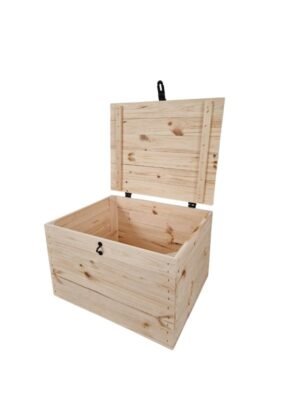
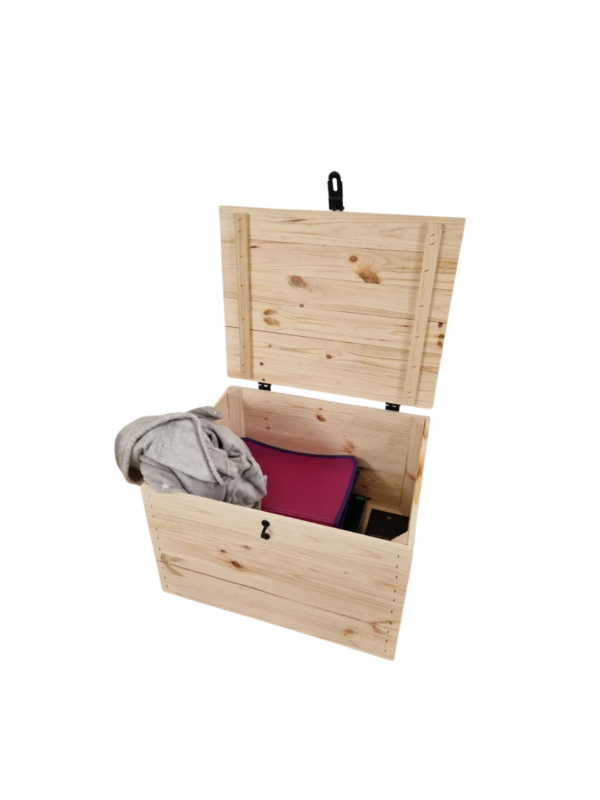
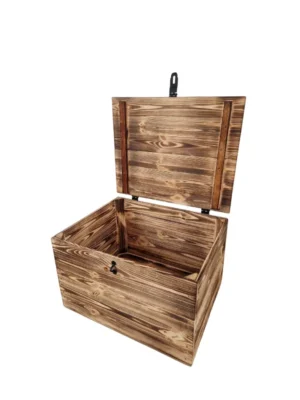
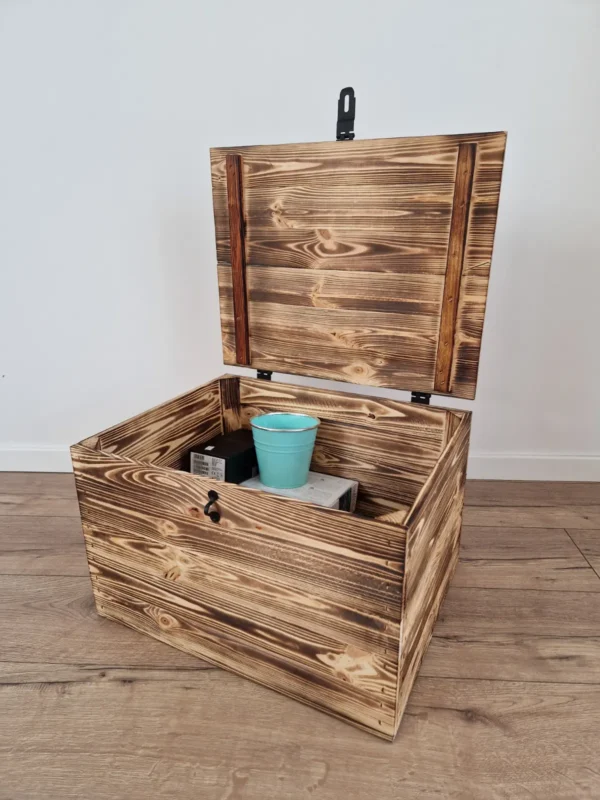
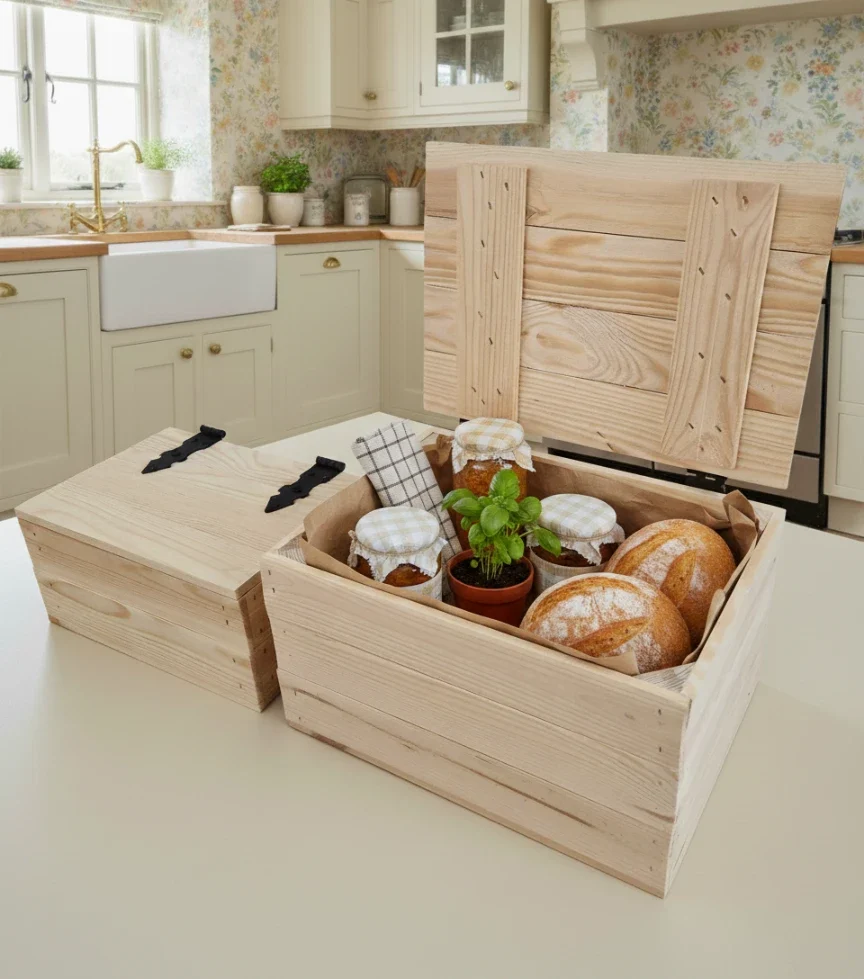
Chests with lids for bedding and blankets


Measurements – how to measure up for your chest
The most common mistake when buying is choosing “by eye”. A chest that looked small in the shop can block the way in your bedroom, while one that seemed big can look lost next to a wide bed. A few minutes with a tape measure will save you disappointment.
At the foot of the bed
This is the most popular spot. Measure the width of your bed (the frame, not the mattress) and the distance from the bed edge to the opposite wall or wardrobe. After placing a 40 cm deep chest there, you’ll still need a comfortable walkway – in practice, at least 60–70 cm. Also check the height of the frame: the chest shouldn’t be higher than the mattress, or your duvet will catch on it.
Under the window
The space under the windowsill is ideal for a chest with a lid, which can double as a little reading bench. Measure the width of the alcove and the height up to the windowsill. Watch out for the radiator: a chest with bedding shouldn’t be right next to it – wood doesn’t like heat, and textiles can dry out.
In the hallway and wardrobe
In the hallway, a chest stores blankets and guest bedding and doubles as a seat for putting on shoes. Here, depth matters – in a narrow hallway, 30–40 cm is better than a wide trunk chest. In the wardrobe or on a shelf, smaller boxes with lids that can be stacked work best.
| Bed width | Recommended chest length | Example solution |
|---|---|---|
| Bed width90 cm (single bed) | Recommended chest lengthapprox. 50–60 cm | Example solutionone chest 50×40×30 cm |
| Bed width120 cm | Recommended chest lengthapprox. 75 cm | Example solutionsolid chest 75×40×30 cm |
| Bed width140 cm | Recommended chest lengthapprox. 75–100 cm | Example solution75×40×30 cm or two chests 50×40×30 cm side by side |
| Bed width160 cm | Recommended chest lengthapprox. 100–125 cm | Example solutiontwo chests 50×40×30 cm or 75 + 50 cm |
| Bed width180 cm | Recommended chest lengthapprox. 125–150 cm | Example solution75 + 50 cm or two chests of 75 cm each (if there’s enough space) |
A handy detail: The 75×40×30 cm chest and the 50×40×30 cm chests have the same depth and height. Placed side by side, they form a straight line, so you can combine them for a wide bed without a “step” effect.
Solid wood or chipboard?
Most affordable chests and trunk chests from furniture stores are made from chipboard or MDF with a wood-effect foil. From a distance, they look like wood – up close, not always. The differences really show in use.
- Moisture – chipboard swells if water gets in (e.g. when mopping the floor), but solid wood just needs wiping and drying.
- Hinges and screws – in solid wood, they hold securely; in chipboard, they loosen over time, especially in the lid you open daily.
- Repairs – you can sand out a scratch in wood, but on foil it’s there for good.
- Smell – pine has a subtle woody scent; cheap boards can smell of glue for weeks, and this can transfer to your textiles.
- Price and weight – here chipboard wins: it’s cheaper and lighter. A fair point if budget is your main concern.
Our chests are made from solid pine. For a solid wood, it’s light, has a lovely, pronounced grain and stands up well to daily use. The chests arrive fully assembled – no flat-pack, no fiddly instructions or bags of screws. For more on choosing the right size and model for different uses, see our guide Which wooden box should I choose?.
Natural or burnt – what suits your bedroom?
The finish is mostly a matter of taste, but a few simple tips can help you decide. A chest at the foot of the bed is on show every day, so it’s worth matching it to your floor, bed frame and accessories.
Natural pine
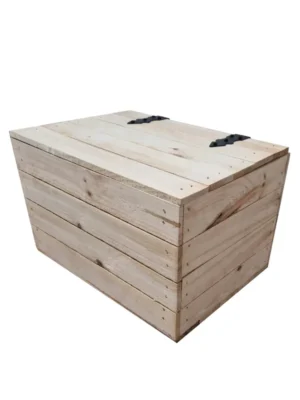
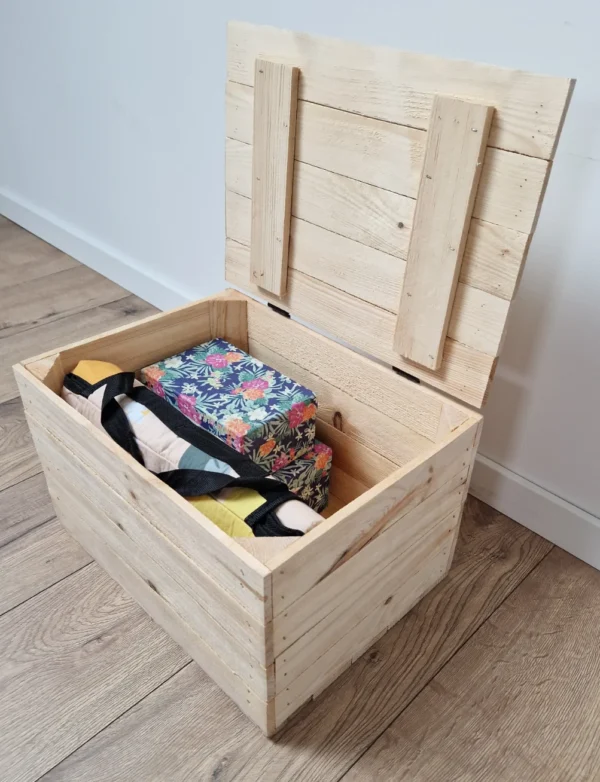
Light, sanded wood that makes the room look bigger and brighter. It’s perfect for Scandinavian-style bedrooms, white walls, light laminate and linen bedding. It also looks lovely in children’s rooms. Over time, pine darkens slightly to a honey tone – a completely natural process.
Burnt pine
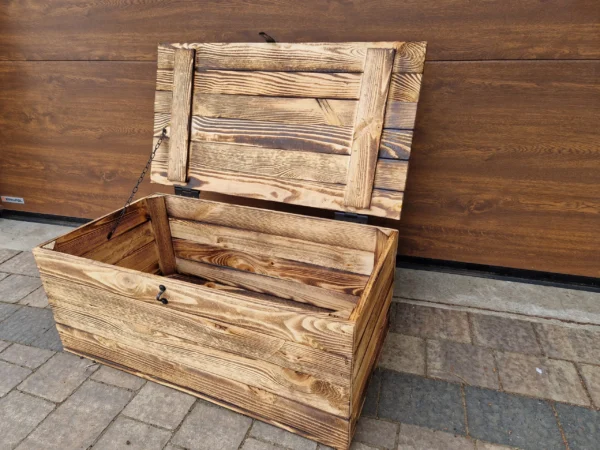
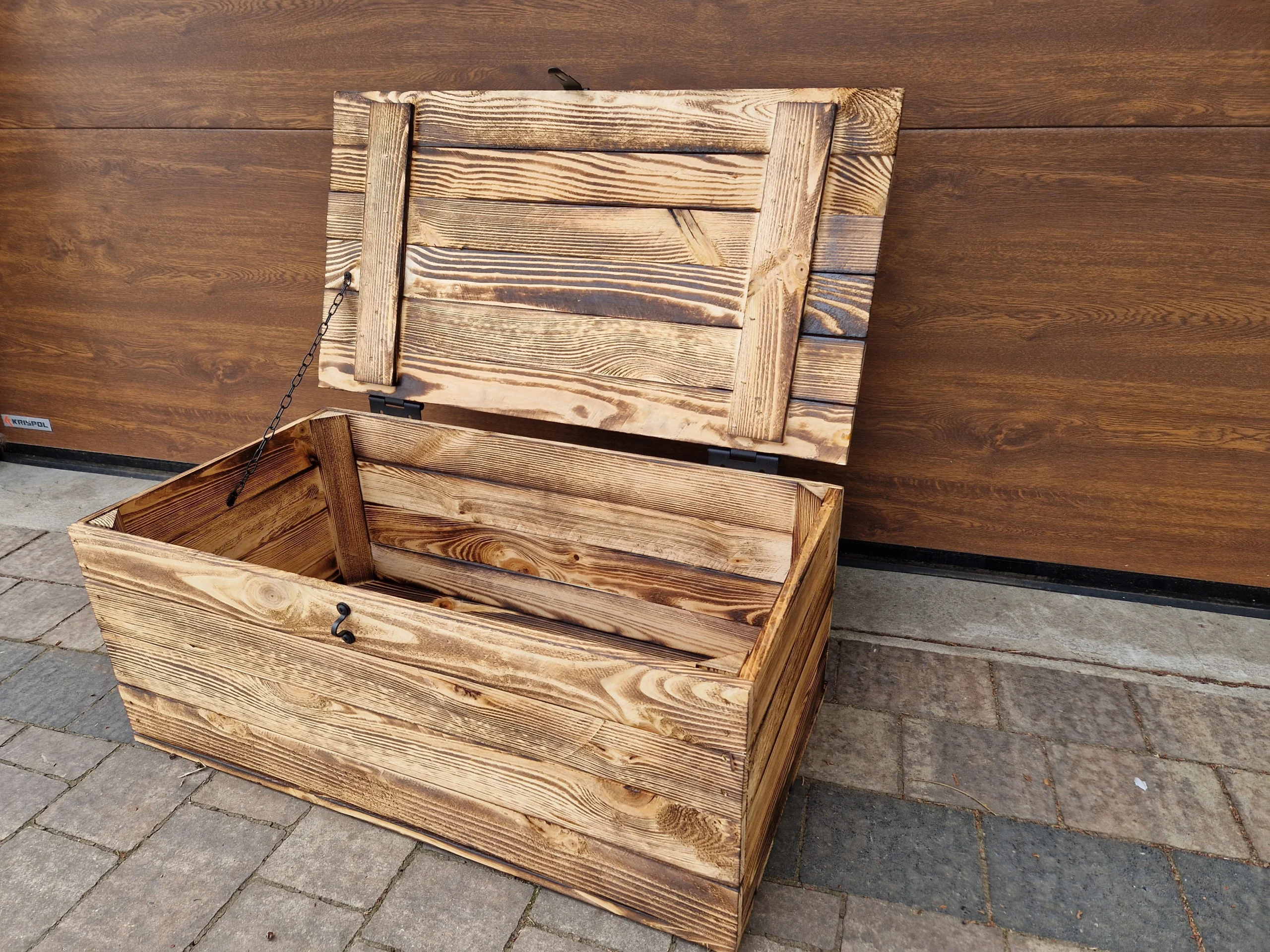
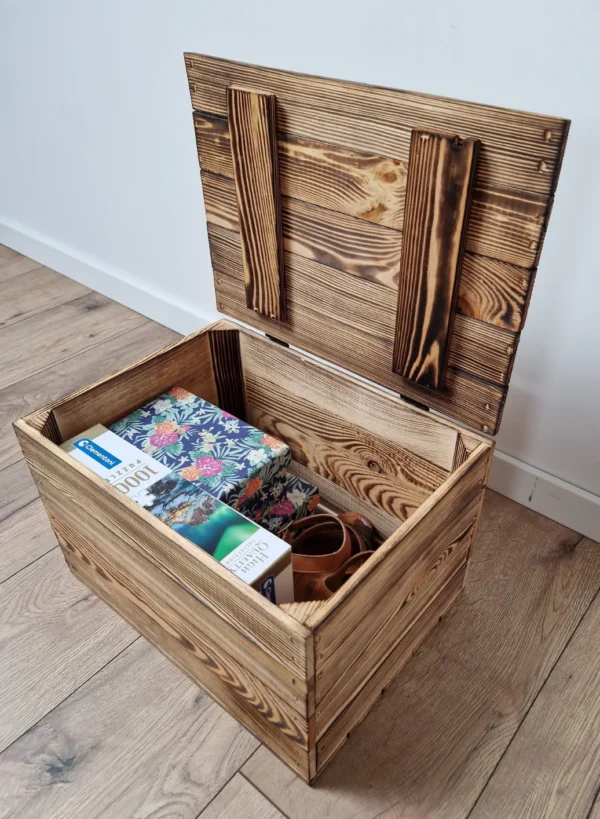
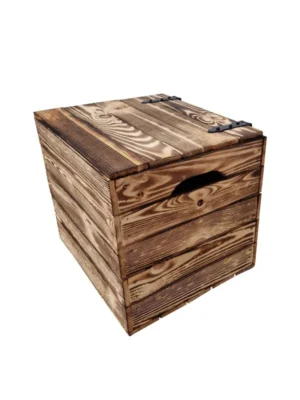
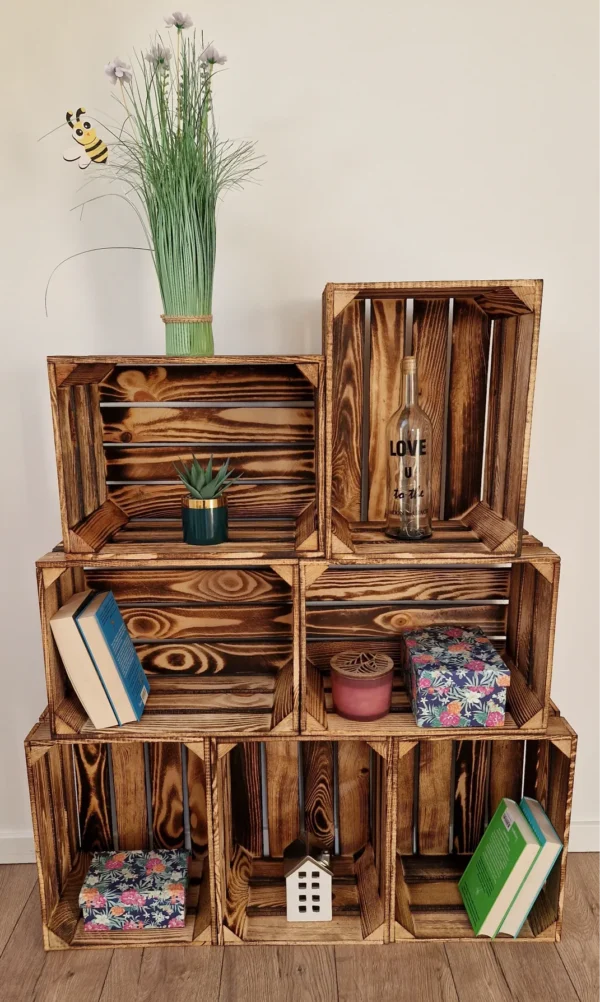
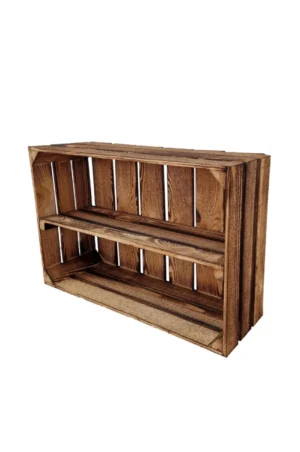
Darker wood with a strongly marked grain and rustic character. It suits country, industrial and boho interiors, dark floors, brick, graphite-grey walls and heavy woollen blankets. A burnt chest hides small scratches and dust well – a real plus in the hallway. If you like this style, take a look at our full range of burnt wooden boxes below.
| Your decor | Better choice | Why |
|---|---|---|
| Your decorWhite walls, light floor, Scandinavian style | Better choicenatural | Whydoesn’t feel “overbearing”, but light |
| Your decorDark floor, wooden beams, rustic style | Better choiceburnt | Whycontrasts with light bedding, enhances the atmosphere |
| Your decorLoft, brick, black accessories | Better choiceburnt | Whymatches metal and raw materials |
| Your decorChildren’s room | Better choicenatural | Whybright, easy to combine with colourful accessories |
| Your decorBusy hallway | Better choiceburnt | Whydust and shoe marks are less visible |
Lid, hinges, clasp – what to look out for
The lid of a bedding chest gets the most use: you’ll open it every few days, sometimes daily. So it’s worth checking a few details before you click “Add to basket”.
Lid
A full lid protects bedding from dust, pet hair and light, which can fade fabrics. This is the key difference between a bedding chest and an ordinary open box. If you’re storing textiles for more than a few weeks, choose a model with a lid – we have a whole category of boxes with lids for this.
Hinges
The lid should open smoothly and not wobble from side to side. For heavier lids, it helps to get into the habit of holding it as you close it – wood is hard, and the lid shouldn’t slam shut. Check the product description before buying to see how the hinges are fitted on each model.
Lock and clasp
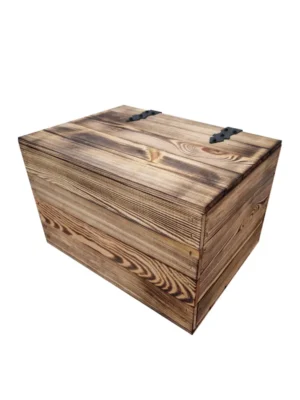
Chests with locks – such as the chest with lid and lock 50×40×31 cm in natural or the burnt box with lid and lock 50×40×30 cm – are ideal if you want the lid to stay closed, e.g. in the hallway or when carrying it. The clasp also gives the chest the look of an old travel trunk.
The lid as a seat
The solid pine chest 75×40×30 cm can be used as a bench at the foot of the bed – you can sit on it briefly to put on socks or shoes, lay out your clothes in the morning, or put a breakfast tray on it. Just bear in mind that 30 cm is lower than a normal chair – so it’s more for short sits than long ones. If you want more comfort, put a flat cushion or a folded blanket on the lid – a simple and effective way to turn your chest into a seat.
How to store bedding in a chest so it stays fresh
Even the best chest won’t help if you put damp or unwashed bedding inside. With a few simple rules, you’ll take it out months later just as fresh as when you put it in.
Step by step
- Wash before storing. Even bedding used just once carries traces of sweat and skin cells, which attract mites and moths. Wash duvets and pillows according to the care label.
- Let everything dry completely. This is the most important point. Bedding that feels dry on the surface can still be damp inside the duvet. Duvets take longer – ideally a day or two in the fresh air or a well-ventilated room.
- Cotton, not plastic. Plastic and vacuum bags trap moisture, and down and feathers clump inside. It’s better to use a cotton bag or an old pillowcase for your duvet – it protects from dust but still lets it breathe.
- Add something against moths. A sachet of dried lavender, cedarwood cubes or rings, or bay leaves. Replace or refresh every few months – the scent fades over time.
- Pack from heaviest to lightest. Duvets and blankets at the bottom, then pillows, bedding sets you use most often on top.
- Air out once per season. Open the chest for a few hours and put the bedding on the balcony or spread it out by an open window. Air out the chest itself too.
A good idea: Store each bedding set inside a pillowcase from the same set. That way, everything stays together, you don’t have to hunt for matching pillowcases, and your chest stays tidy.
When several smaller boxes are better than one large chest
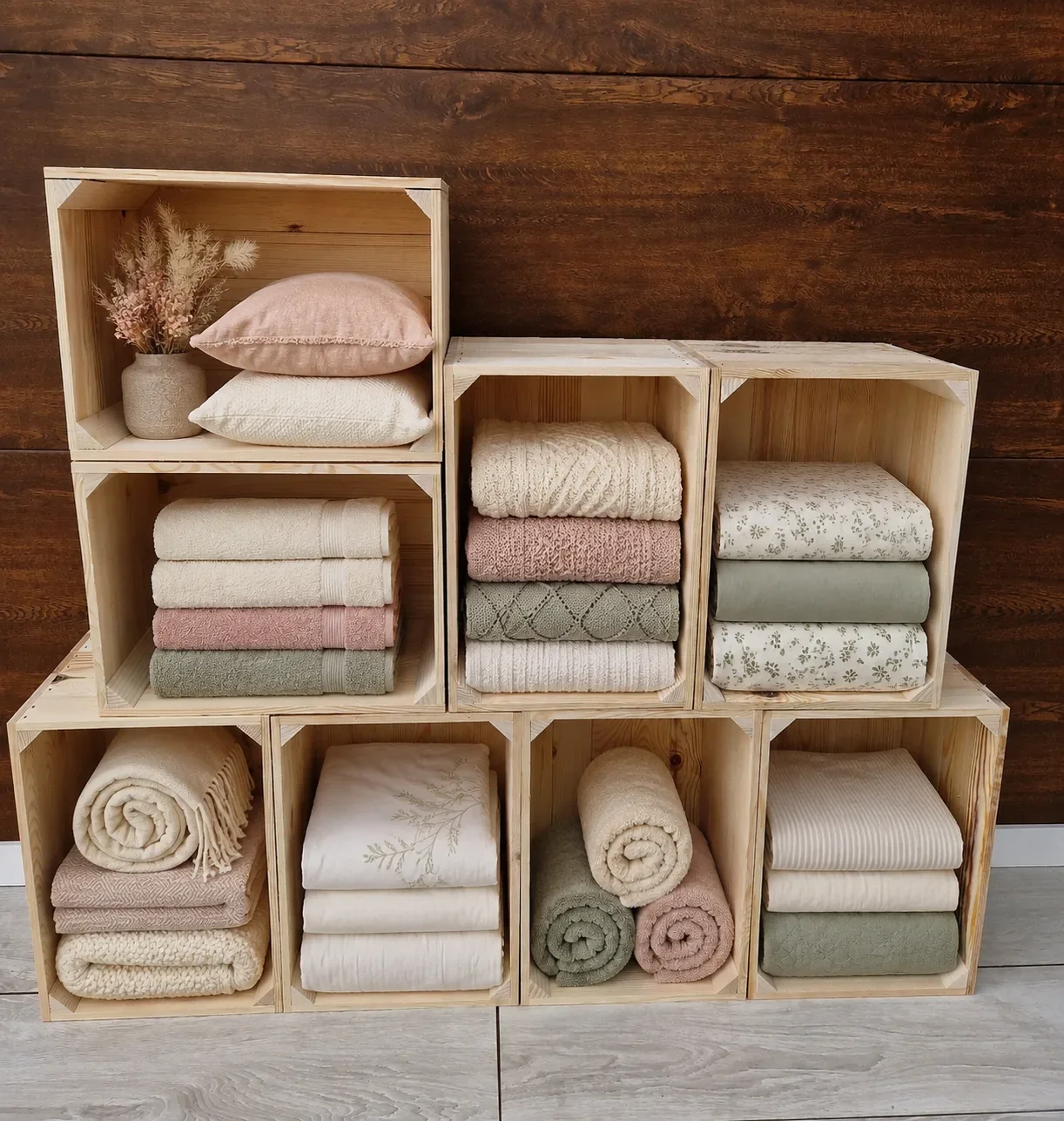
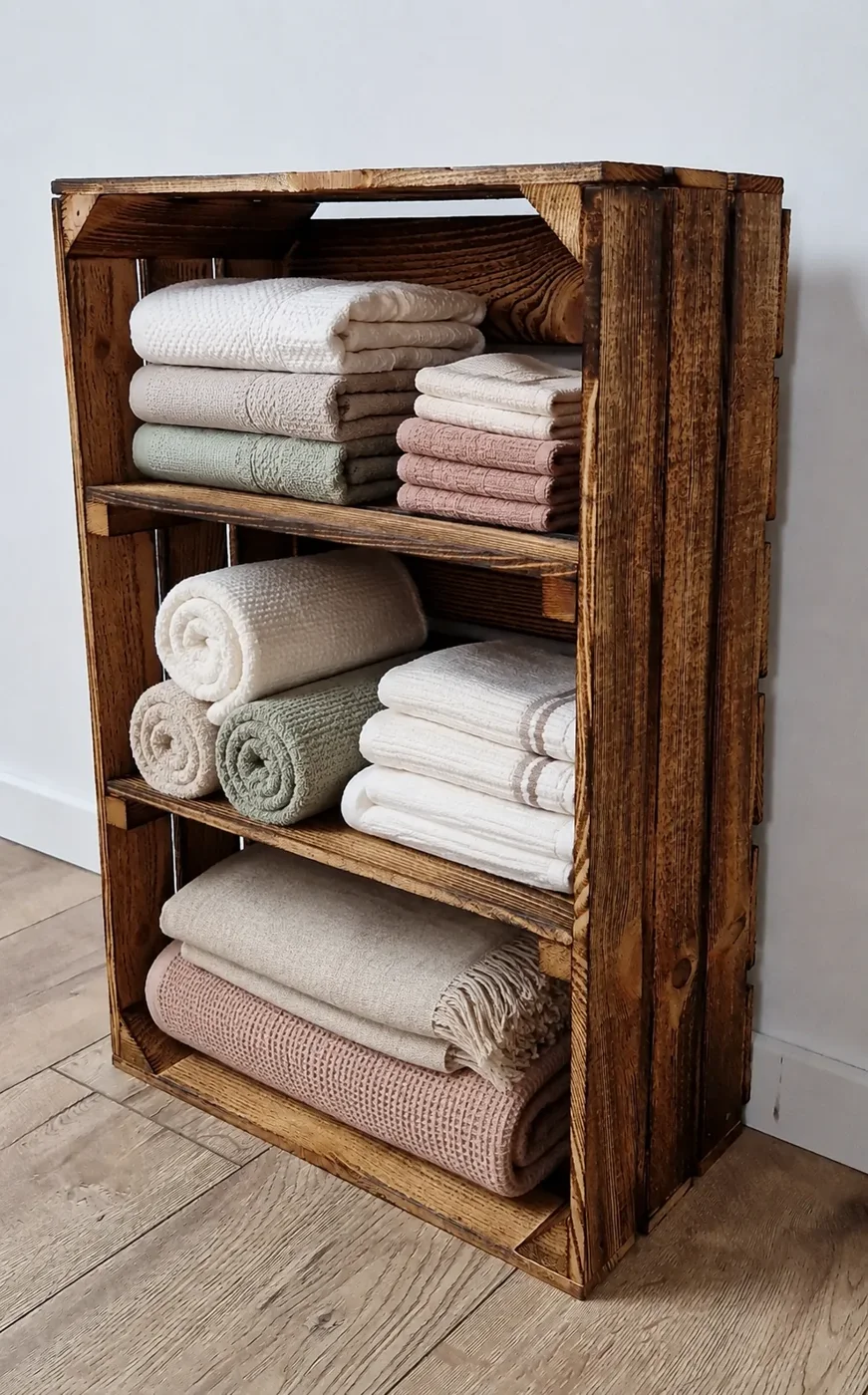
A large bedding chest is practical, but not always the best solution. If you want to store duvets as well as bedding sets, towels or tablecloths, several smaller boxes with lids let you sort everything by type. Then you don’t have to dig through a duvet just to find a single pillowcase.
For this kind of organisation, the box with lid 39×29×25 cm in natural and its burnt version are ideal, as are the taller boxes with handles and lid 33×33×39 cm. The latter have a square cross-section and fit well in shelving units – if you have an IKEA KALLAX, see our guide to boxes for KALLAX.
Smaller boxes with lids for bedding and towels
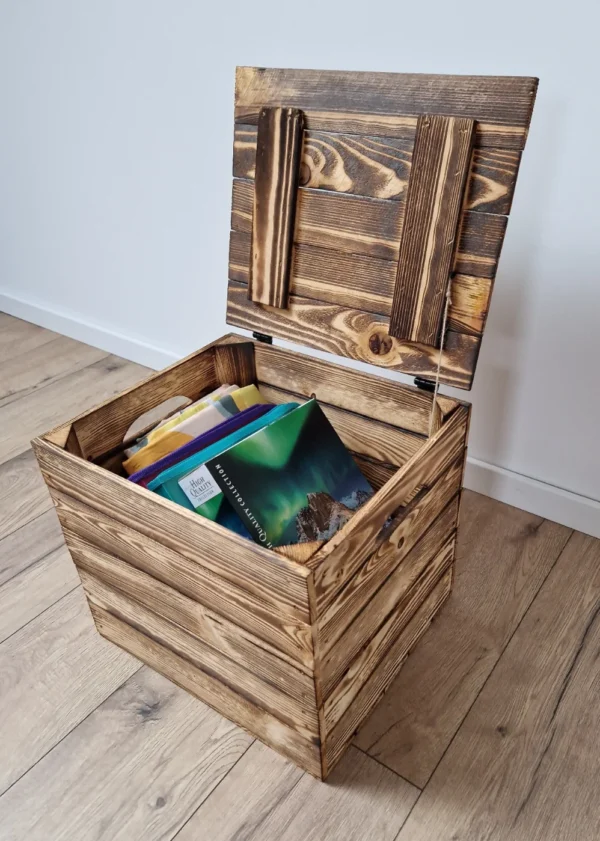
Toy and blanket chests in the children’s room
A wooden toy chest is closely related to the bedding chest – in many homes, a single box in the children’s room does both jobs: in the evening, building blocks and cuddly toys go in, and in winter, a spare blanket or sleeping bag. Solid wood is a good choice here: it stands up to knocks, being pushed around and climbed on, and also feels warm and cosy.
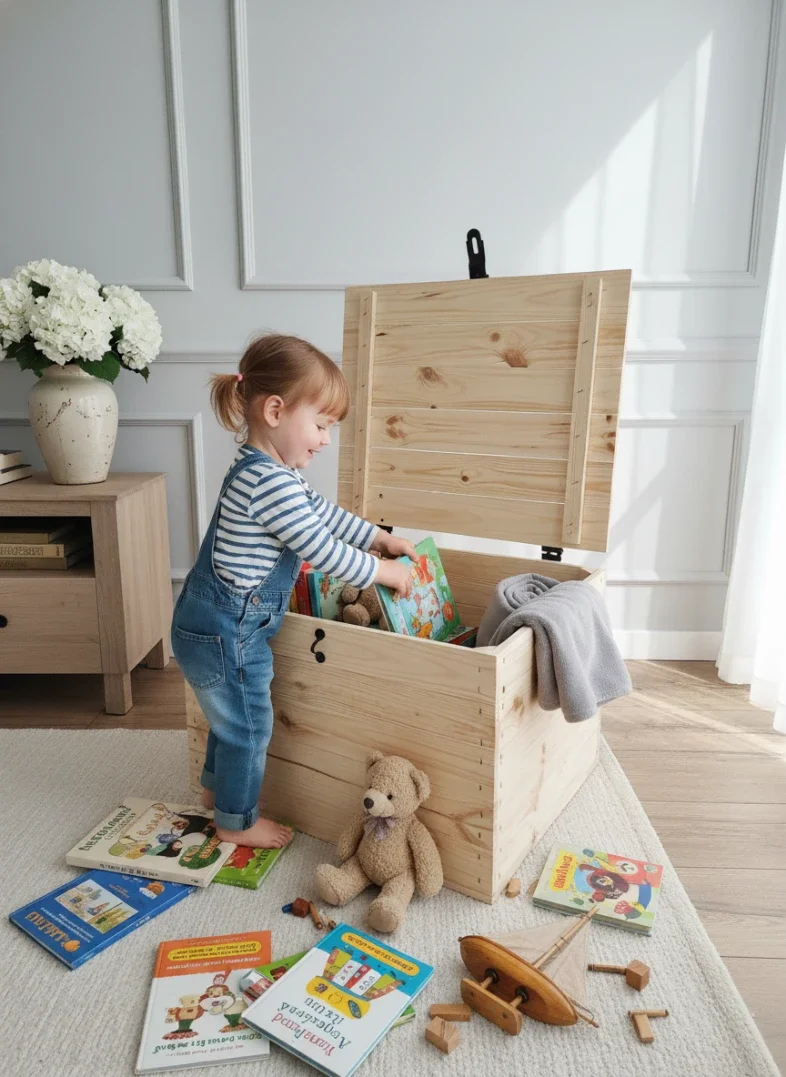
Safety and the lid
This needs care. A wooden lid is heavy and hard, and small children love to look inside, climb in and close it behind them. Trapped fingers are the most common problem with toy chests.
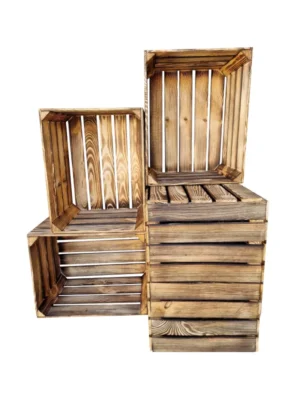
- For toddlers, choose a box without a lid. An open box like the burnt box 50×40×30 cm or its natural version is the simplest and safest – your child can put toys in and take them out by themselves.
- A chest with a lid only for older children who understand they need to hold the lid when closing. And at first, always under adult supervision.
- Watch out for fingers – both when closing and if siblings are playing together. Don’t leave a chest with a lid where a child plays alone.
- Don’t put the chest under the window in a small child’s room – it can be used as a step to the windowsill.
- Don’t let children hide inside a chest with the lid closed.
How to set up a play corner
For younger children, two or three smaller boxes are better than one big one – blocks in one, cuddly toys in another, cars in another. Your child will find what they want more easily, and tidying up becomes a game of “Who lives where?”. You can stick a picture on the front to show what’s inside.
As your child grows, the same chest can move to the bedroom or hallway and carry on as a blanket chest. That’s one of the advantages of solid wood – you don’t outgrow it as quickly as you do colourful plastic.
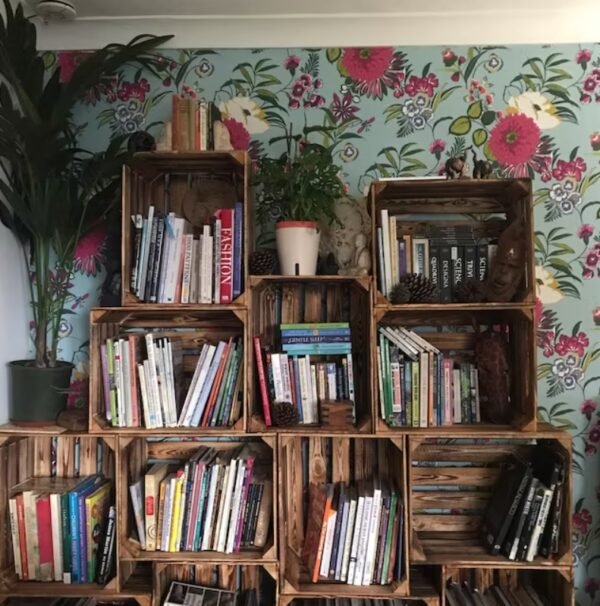
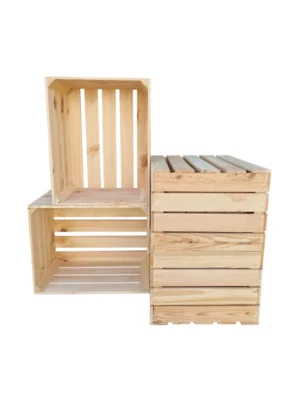
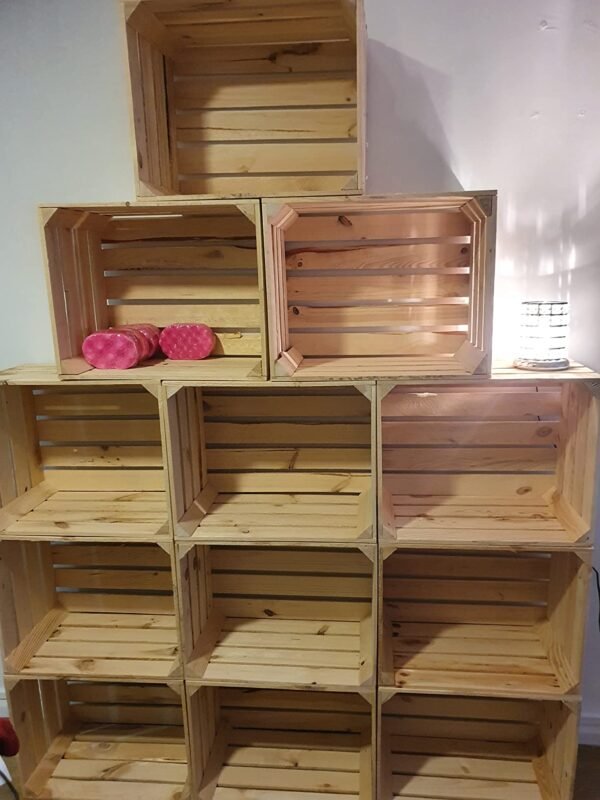
Boxes without lids for toys and blankets
Which chest for whom – a quick guide
If you’re still unsure after reading, here’s an overview of the most common situations. These aren’t hard and fast rules, but a good starting point.
- You want a large bedding chest for the bedroom, at the foot of a 140–180 cm bed – the solid pine chest with lid 75×40×30 cm (from €57.90). It holds a duvet and pillows and doubles as a bench.
- You have a single bed or little space – the chest with lid and lock 50×40×31 cm in natural (from €35.90) or the burnt version 50×40×30 cm (from €10.90).
- You want to store bedding, towels and blankets separately – several boxes with lid 39×29×25 cm (from €23.90) or 33×33×39 cm with handles (from €24.90).
- You’re setting up a small child’s room – an open box 50×40×30 cm, natural or burnt (from €10.90).
- A soft seat is your top priority – consider an upholstered chest or put a cushion on the wooden lid.
- You’re buying a new bed for a small flat – a bed with a storage drawer can offer more space than any chest.
A wooden chest also makes a lovely housewarming, wedding or new-parent gift. If you’re not sure which size to choose for the recipient, you can send a gift card by email – then they can decide for themselves.
How to order
Ordering is simple and doesn’t require a customer account:
- Choose the size and finish – natural or burnt. The dimensions are in the name and description of each product.
- Add the chest to your basket – if you’re ordering several for one room, add them together.
- Select the delivery method – we ship with DHL from our family workshop to anywhere in Germany. Delivery details can be found on the Shipping & Delivery page.
We send the chests from our workshop. They arrive fully assembled, no need for assembly – just unpack, put in place and fill with bedding. If you have a question about the sizes or aren’t sure which model to choose, contact us via the Contact page.
Frequently asked questions
For the bedroom, most people choose a long, low chest with a lid, placed at the foot of the bed. For a 140–180 cm bed, the 75×40×30 cm size works well; for a single bed, 50×40×30 cm. It’s important that the chest isn’t higher than the mattress and doesn’t block the walkway. Roughly yes – a 75×40×30 cm chest will hold a folded all-season duvet 160×200 cm and two pillows. A very thick winter or down duvet can take up almost the entire inside. It all depends on the thickness of the filling and how you fold it. In practice, they’re often the same. A trunk chest is usually a chest with a lid, clasp and traditional look, while “chest” is a broader term that also includes models without lids. For bedding storage, the version with a lid is better. The solid pine chest 75×40×30 cm can be used as a bench at the foot of the bed or in the hallway – for example, for putting on shoes. It’s 30 cm high, so lower than a chair. For longer sitting, it’s best to put a cushion on top. Pine has a subtle, natural scent, usually most noticeable at first. If you prefer a neutral smell, store bedding in a cotton bag or pillowcase and add a lavender sachet. For small children, a box without a lid is better, as a heavy wooden lid can trap fingers. A chest with a lid is more suitable for older children – show them at first how to close it safely. No. Our chests are delivered fully assembled. After unpacking, you can put them straight in place.Which bedding chest is best for the bedroom?
Will a duvet fit in a wooden chest?
What’s the difference between a trunk chest and a chest?
Can you sit on a wooden chest?
Will bedding in a wooden chest smell of wood?
Is a chest with a lid suitable for a small child’s toys?
Does the chest need to be assembled?
Conclusion – choose a chest that will last you for years
A good bedding chest fits your space, holds what you really want to store, and doesn’t annoy you every time you open it. If durability, looks and healthy storage for textiles matter to you, a wooden chest with a lid is an excellent choice. If a soft seat or the lowest price is more important, go for upholstered or plastic – and that’s absolutely fine too.
Measure your space, think about what you want to store, and choose the finish to match your decor. And if you want to see all models at a glance, have a look at the boxes with lids category – bedding, blankets and spare pillows will find a new home there.

For years, she has been furnishing homes with wooden crates – from small studio flats to houses with gardens. She writes about organisation, storage and decorating ideas that work without any renovation.
All items by this author








Add comment