
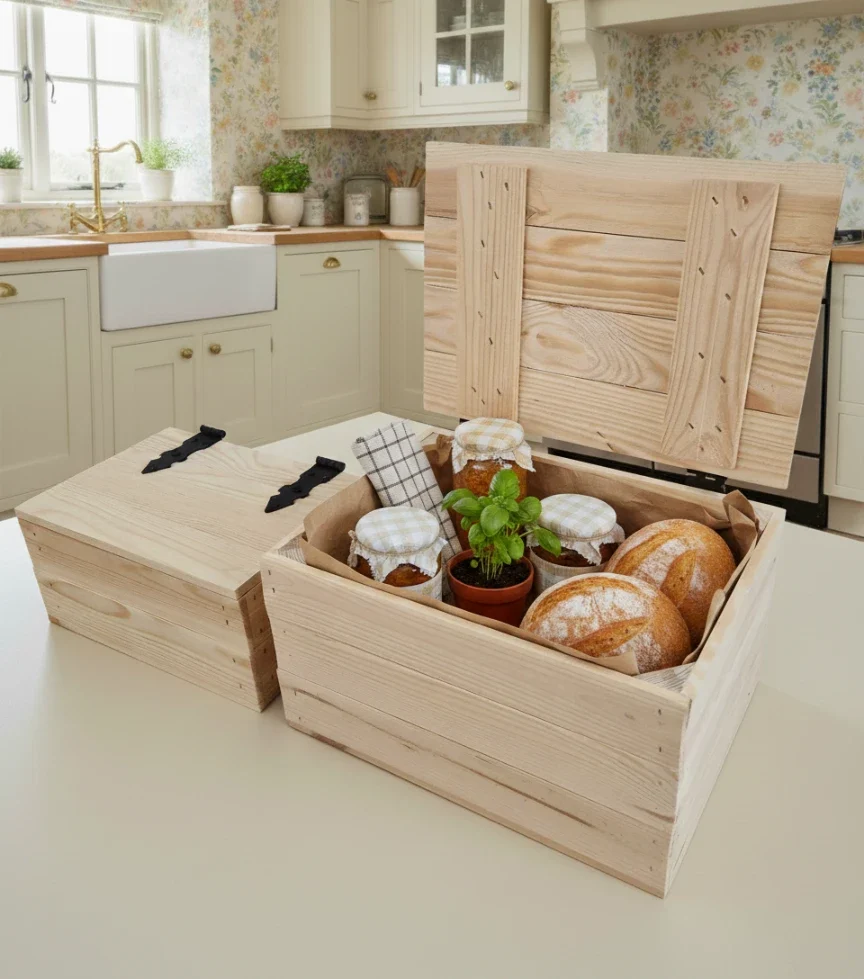
Wooden storage boxes are the ideal solution if you’re looking for durable and attractive organisation systems for your home. In this guide, you’ll learn what to look out for when choosing a wooden storage box, what alternatives exist, and how to find the right size for your needs.
We compare the most important materials for storage boxes: wood, plastic, wicker and rattan, fabric and felt, cardboard, and metal. Since 2016, we have been making wooden crates in our family workshop and shipping them with DHL throughout Germany (delivery time 2–3 working days). Nevertheless, we’ll give you an honest overview of when wood is the best choice – and when other materials are more practical.
In this article, you’ll find decision-making aids by material and room, a method for calculating your actual container needs, tips for choosing the optimal size, and an overview of our wooden crates – from small boxes to large chests with lids.
Before you buy containers: declutter and sort into categories
The most common mistake is to buy boxes “just in case” before you know what’s going in them. The result is predictable: some containers are too small, some remain empty, and the mess stays – just hidden behind a pretty front. So always start with tidying up, not with shopping.
Step 1: declutter before buying
Clear everything out of the area you want to organise – a cupboard, a cellar shelf, a corner of the children’s room. Sort everything into three groups: keep, give away or sell, throw away. Be honest: clothes you haven’t worn for two seasons, broken toys, and cables for devices you no longer own don’t need a container.
Step 2: the “one container = one category” rule
Sort what’s left into categories: gloves and hats, chargers and cables, sewing supplies, building blocks, Christmas decorations, tools, spices. Each category gets its own container. This is the simplest organising rule ever – if you’re looking for tape, you open one box, not five.
Mixing categories in one box (“miscellaneous”) is the direct route to that drawer where no one can find anything. If a category is too small for its own container, combine it with a related one (e.g. batteries and chargers), but not just any random one.
Step 3: How many containers do you need?
Count the categories – that’s your minimum number of containers. Then estimate the volume of each category: will it fit in a small box or does it need a large chest? Plan for one or two spare containers, as there’s always something extra (especially in the children’s room). Make a list: category – approximate size – place where the container will go. With such a list, shopping takes a quarter of an hour, not the whole afternoon.
Material comparison: wood, plastic, wicker, fabric, cardboard, metal
Every material has its strengths and weaknesses. Below, we describe them in turn; at the end of the section, you’ll find a comparison table. The prices refer to typical medium-sized containers available in Germany – they may vary depending on shop, size, and quality.
Wood – for years to come and to show off
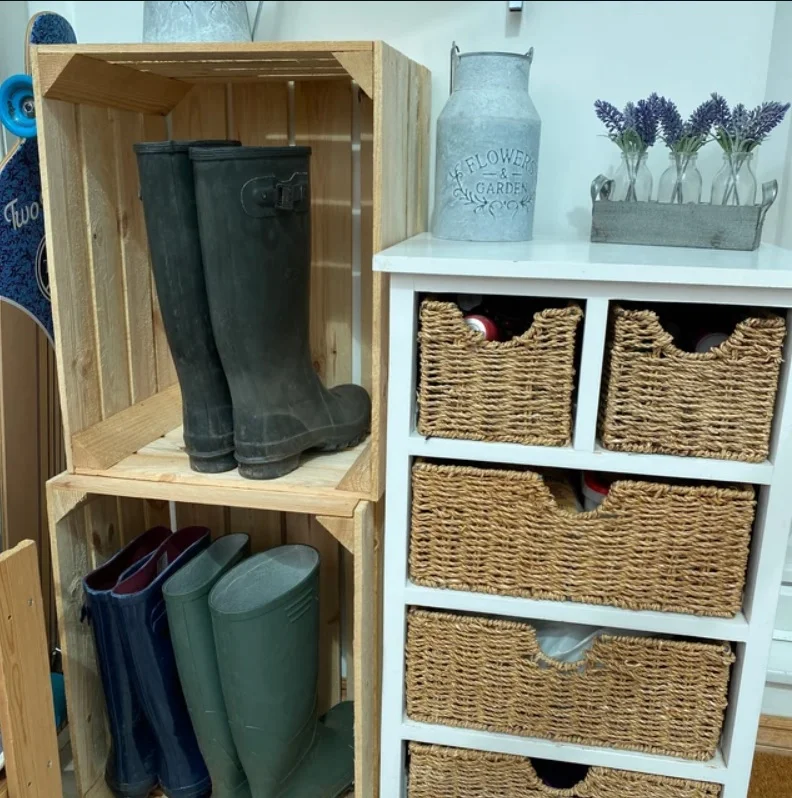
A wooden crate is rigid, sturdy, and doesn’t deform under weight. You can stack crates, slide them across the floor, and use them for years – wood doesn’t become brittle with age like old plastic, and small scratches only add character. It looks good on open shelves, in the living room, hallway, and children’s room, so you don’t need to hide it away.
An open crate allows air to circulate, making it ideal for vegetables, fruit, shoes, or firewood. The downsides? It’s heavier than plastic and doesn’t like constant moisture – in a damp cellar without ventilation, wood can absorb moisture, and without a lid, the contents aren’t protected from dust. Wooden containers are also usually more expensive than plastic ones.
Plastic – unbeatable in damp conditions
Plastic storage boxes are lightweight, affordable, and easy to wash, and models with lids (ideally with click closure or seal) offer good protection from dust, moisture, and insects. Transparent sides let you see the contents without opening the box. In the cellar, garage, and attic, where temperature and humidity fluctuate, plastic with a lid is simply the sensible choice.
The downsides: Cheap containers can crack after a few seasons, especially in frost, and thin lids bend under weight. Plastic rarely looks good when on display, and a tightly sealed box doesn’t allow air to circulate – so it’s not suitable for vegetables, and damp clothes can become musty inside.
Wicker and rattan – light and airy
Baskets made of wicker and rattan are attractive, light, and breathable. They work well in the bathroom for towels, in the living room for blankets, and in the hallway for scarves and hats.
The downsides: The weave can fray and catch on delicate fabrics, baskets can’t be overloaded and can’t be stacked. Most baskets have no lid, so the contents get dusty. For heavy items like books or tools, choose something sturdier.
Fabric and felt – soft and for the wardrobe
Containers made of fabric and felt are affordable, light, and often foldable – when empty, they take up hardly any space. They’re ideal for wardrobes, dressing rooms, and drawers for underwear, socks, scarves, or cuddly toys. The soft sides won’t scratch furniture and are safe in children’s rooms.
Their weakness is lack of rigidity: under weight, they bulge, and after a few washes (if they’re washable at all) they lose their shape. In damp rooms, fabric absorbs smells, and felt attracts dust and pet hair. Good containers for clothes and light items, but not for the cellar or heavy things.
Cardboard – cheap but short-lived
Moving boxes and decorative cardboard boxes are the cheapest and are good for moving house or storing documents and photos in a dry cupboard. Decorative cardboard storage boxes can also look attractive on a shelf.
However, cardboard can’t cope with moisture: in the cellar, it quickly becomes soft, mouldy, and attracts silverfish. The corners bend, and the bottom can give way under weight. Consider them a temporary solution or for light items in a dry, warm room.
Metal – for the workshop and industrial style
Metal boxes and wire baskets are very robust, easy to clean, and fit well in the garage, workshop, and industrial-style interiors. Wire baskets allow air to circulate, and lockable metal boxes protect tools.
However, metal is heavy, can scratch shelves, and will rust if left damp.
Material comparison table
| Material | Durability | Appearance | Moisture | Dust / Lid | Weight | Price (guide) | Best for |
|---|---|---|---|---|---|---|---|
| MaterialWood | Durabilityvery high, for many years | Appearancevery good, for display | Moisturedoesn’t like constant moisture | Dust / Lidopen ones get dusty; also available with lid | Weightmedium to heavy | Price (guide)medium to higher | Best forLiving room, hallway, children’s room, pantry, shoes, firewood |
| MaterialPlastic | Durabilitymedium (cheap ones crack) | Appearanceaverage | Moisturevery good resistance | Dust / Lidwith lid – best protection | Weightlight | Price (guide)low | Best forCellar, attic, garage, under the bed |
| MaterialWicker / rattan | Durabilitymedium | Appearancevery good | Moisturetolerates moderate moisture | Dust / Lidusually without lid | Weightlight | Price (guide)low to medium | Best forBathroom, living room (blankets), hallway |
| MaterialFabric / felt | Durabilitylow to medium | Appearancegood | Moistureweak – absorbs smells | Dust / Lidrarely with lid | Weightvery light | Price (guide)low | Best forWardrobe, dressing room, drawers, cuddly toys |
| MaterialCardboard | Durabilitylow | Appearancedepends on design | Moisturevery weak | Dust / Lidoften with lid | Weightvery light | Price (guide)lowest | Best forDocuments, photos, moving |
| MaterialMetal | Durabilityvery high | Appearanceraw, industrial style | Moisturecan rust | Dust / Lidwire baskets without protection | Weightheavy | Price (guide)medium | Best forGarage, workshop, industrial interiors |
Which container for which room?
The same container can work brilliantly in the living room and fail completely in the cellar. So instead of asking “Which material is best?” ask “Where will this container be kept?”. The following table is our honest recommendation – including where wood isn’t the best choice.
| Room | Best container | Why | What to avoid |
|---|---|---|---|
| RoomDressing room, wardrobe | Best containerFabric or felt basket; wooden crate on a higher shelf | Whylight, soft, easy to take out; wood for shoes and handbags | What to avoidCardboard in a damp cupboard |
| RoomCellar | Best containerPlastic container with lid and seal; for vegetables – an open wooden crate | WhyMoisture and dust; vegetables need air circulation | What to avoidCardboard and fabric |
| RoomGarage | Best containerPlastic container with lid, metal toolbox | WhyDust, temperature fluctuations, grease | What to avoidWicker and fabric |
| RoomAttic | Best containerPlastic container with lid | WhyHeat in summer, frost in winter, dust | What to avoidCardboard (silverfish, moisture) |
| RoomBathroom | Best containerWicker basket or plastic container | WhySteam; wicker dries well | What to avoidUntreated wood directly by the shower, cardboard |
| RoomKitchen, pantry | Best containerWooden crate for vegetables, fruit, bread; airtight jars for loose foods | WhyAir circulation for vegetables, attractive look on open shelves | What to avoidClosed plastic for potatoes and onions |
| RoomChildren’s room | Best containerWooden crate or soft fabric basket | Whysturdy, won’t tear, children can tidy up themselves easily | What to avoidGlass and sharp-edged metal containers |
| RoomLiving room | Best containerWooden crate, wicker basket | Whyon display and should match the decor | What to avoidclear plastic in open shelves |
| RoomUnder the bed | Best containerflat container with lid (plastic or wood), ideally with wheels or easy to pull out | Whydust quickly collects under the bed | What to avoidopen baskets without lid |
Living room and hallway – appearance matters here
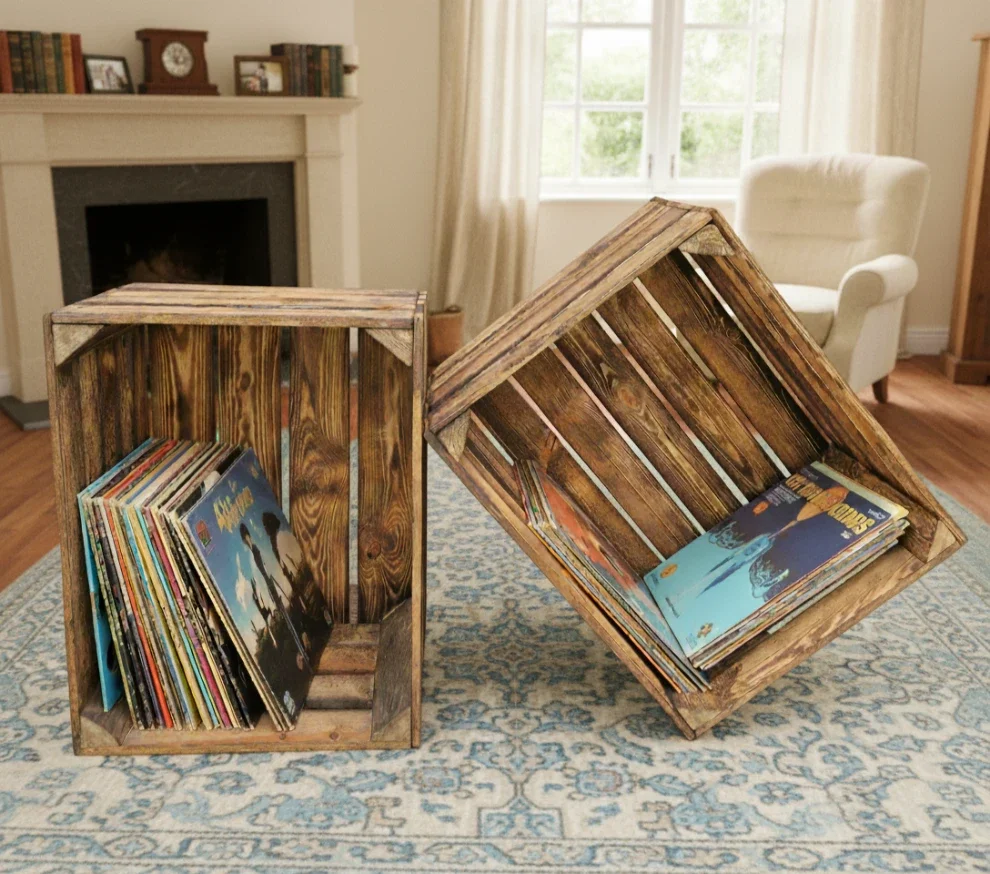
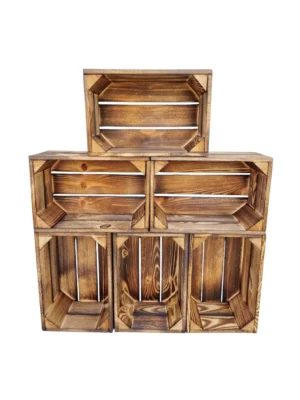
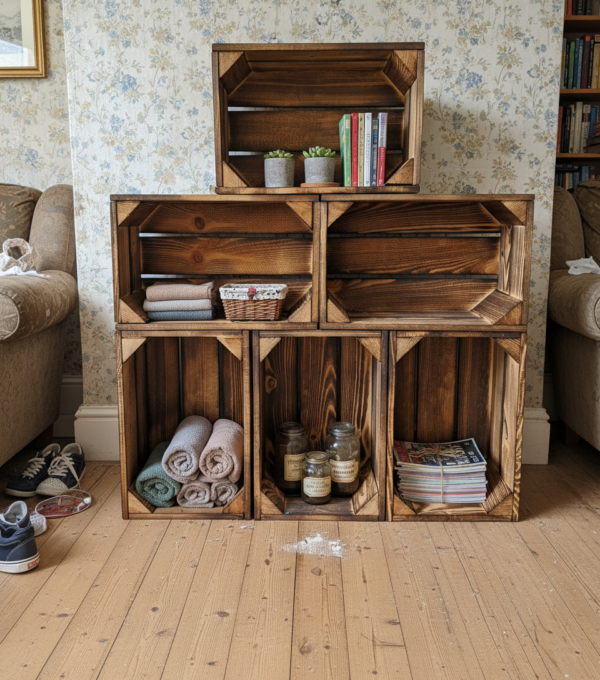
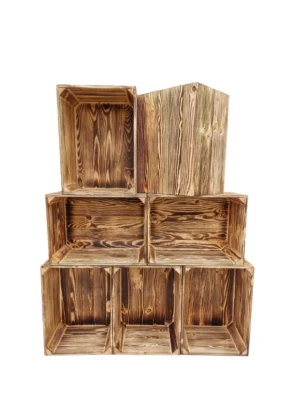
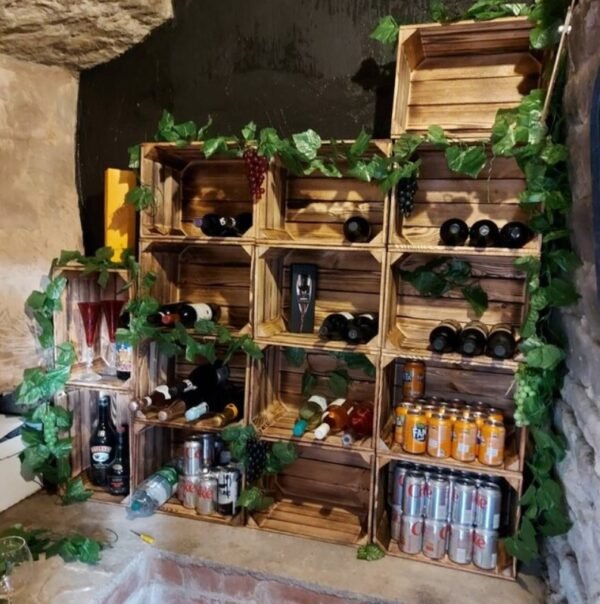
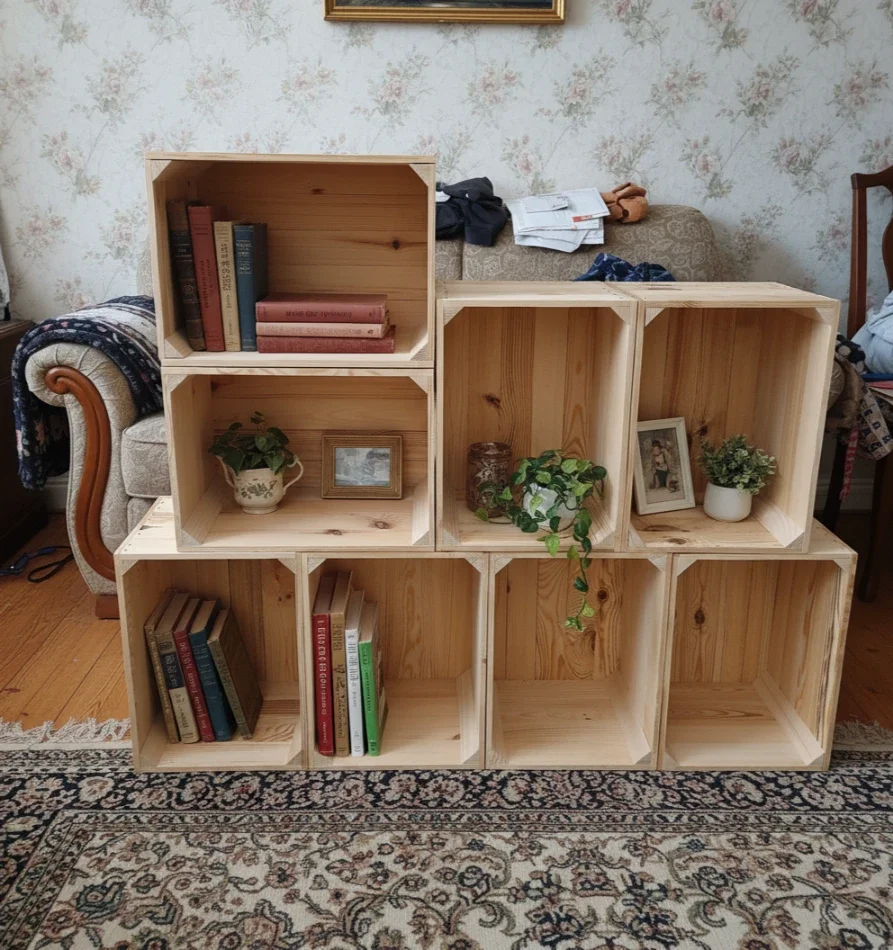
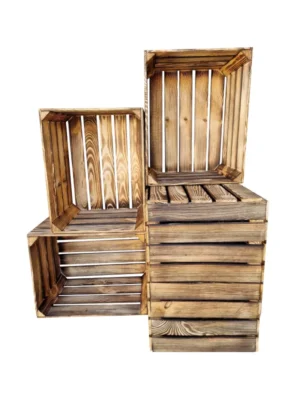
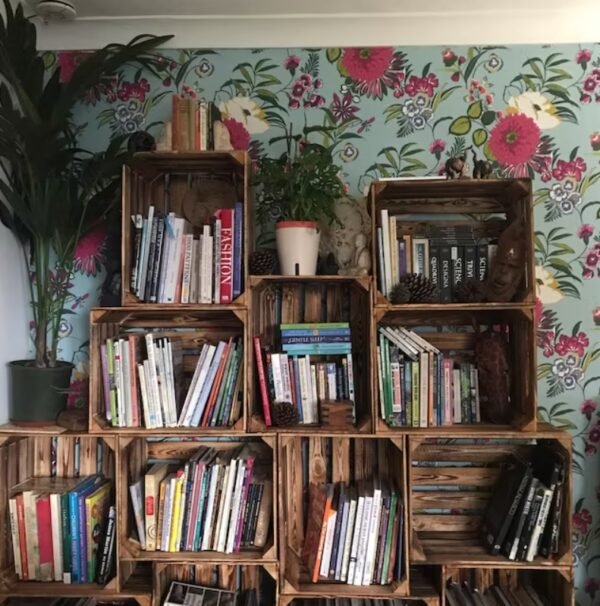
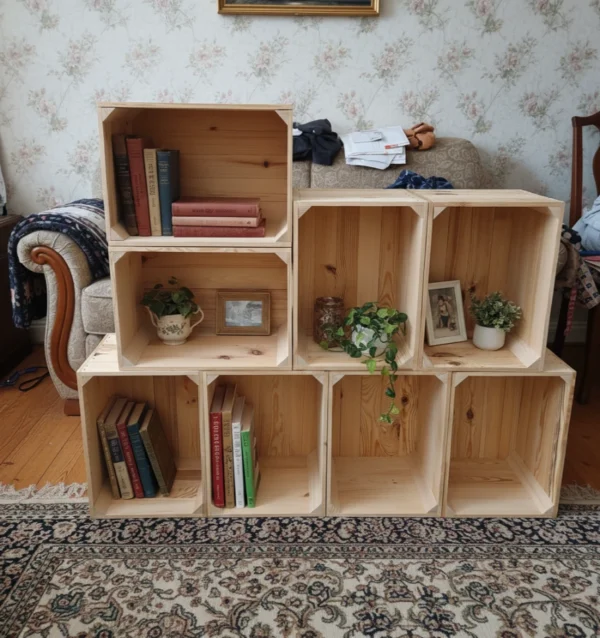
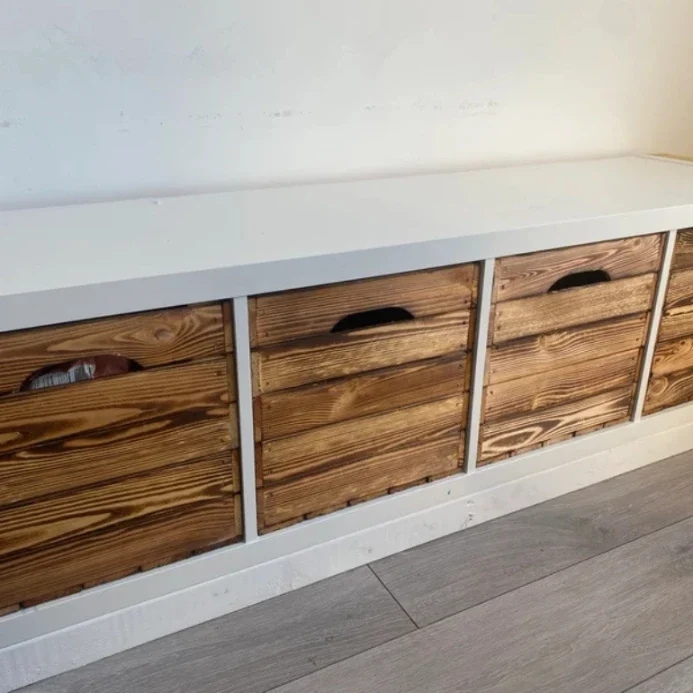
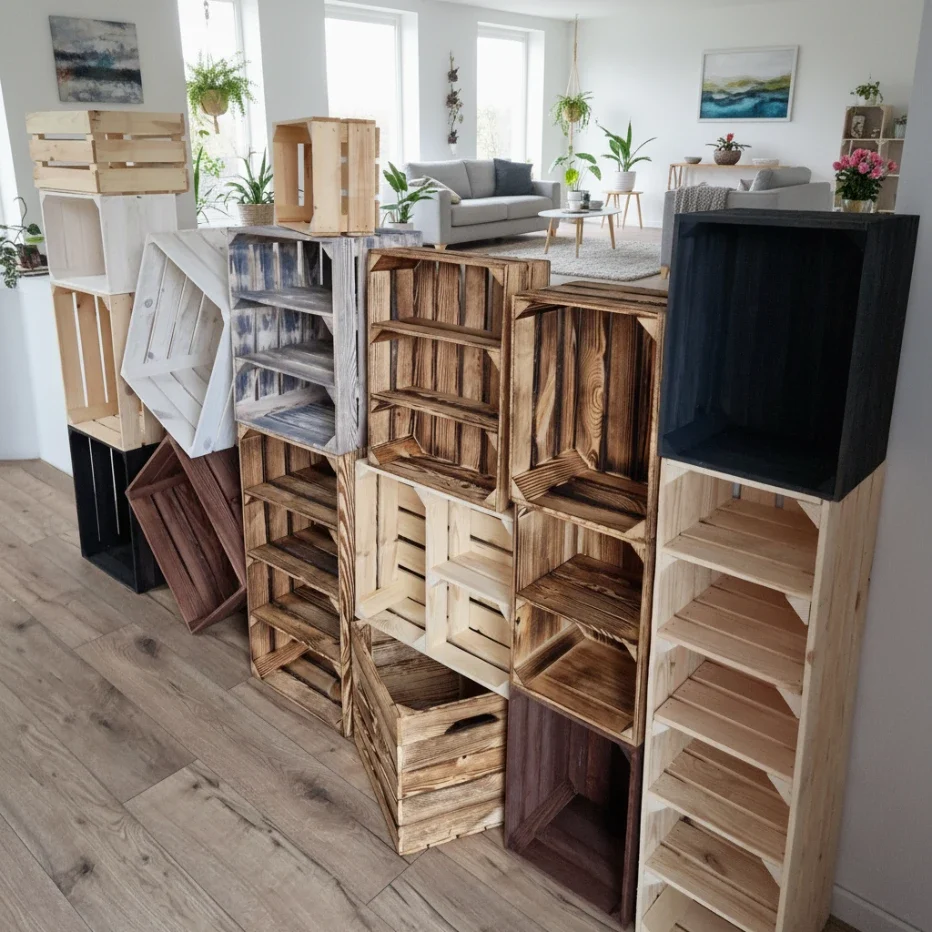
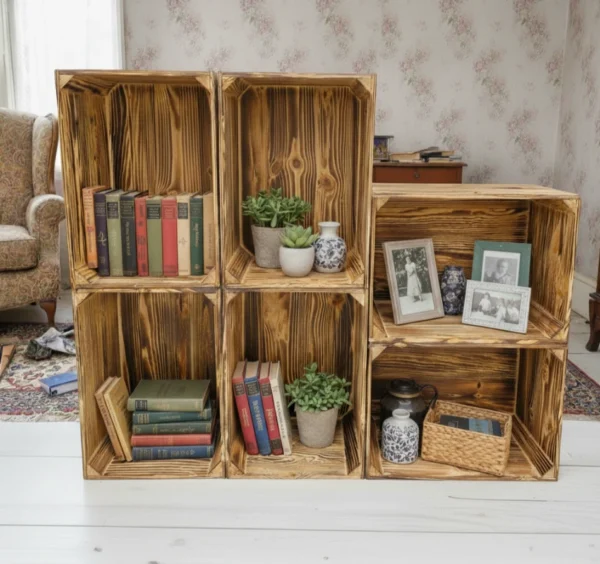
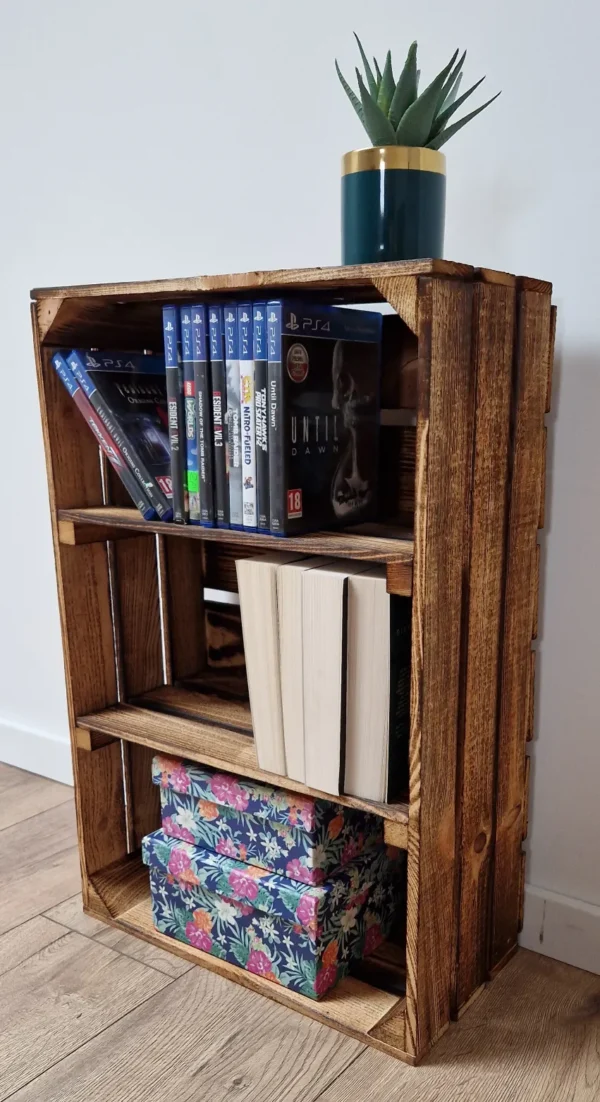
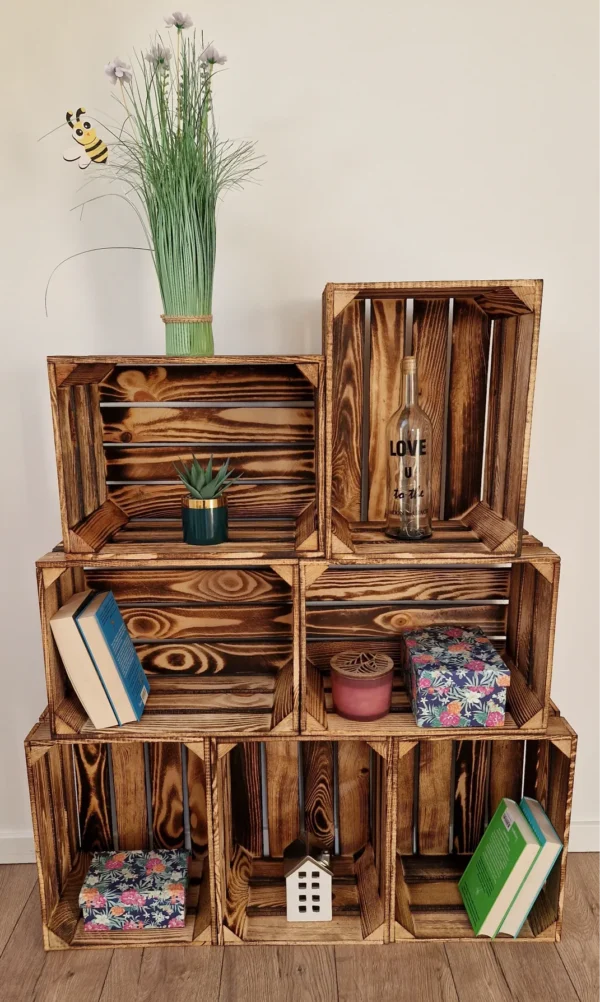
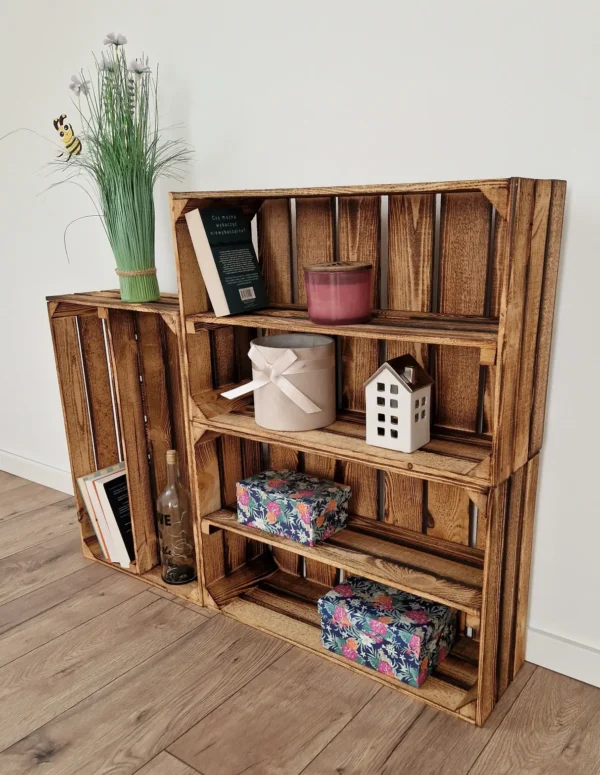
In the living room, a container is part of the decor. Wooden crates on shelves, under the TV, or directly on the floor bring order to books, records, board games, remote controls, and blankets, and make the room feel more homely. Natural pine suits light, Scandinavian interiors, burnt crates suit rustic rooms, industrial style, and darker furniture.
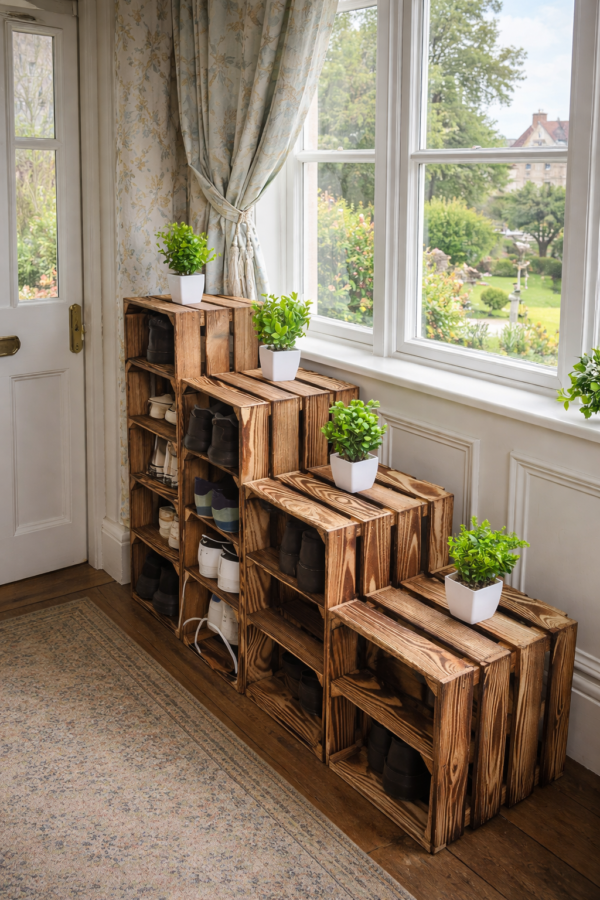
In the hallway, crates for shoes, hats, and gloves prove their worth – airy, sturdy, and robust enough for daily use. If you have an IKEA KALLAX shelf, take a look at our guide to boxes for the KALLAX shelf, as every centimetre counts there.
Kitchen and pantry – a quick note on food storage
Food containers are a topic in themselves: flour, groats, sugar, or oats should be kept in airtight jars or containers with lids that are suitable for food. A wooden crate isn’t meant for loose food – but it’s ideal for vegetables, fruit, bread in a bag, preserving jars, and bottles. Potatoes, onions, apples, or pumpkins like air, and an open crate in a cool pantry is better for them than a closed plastic box.
Children’s room – sturdy and safe
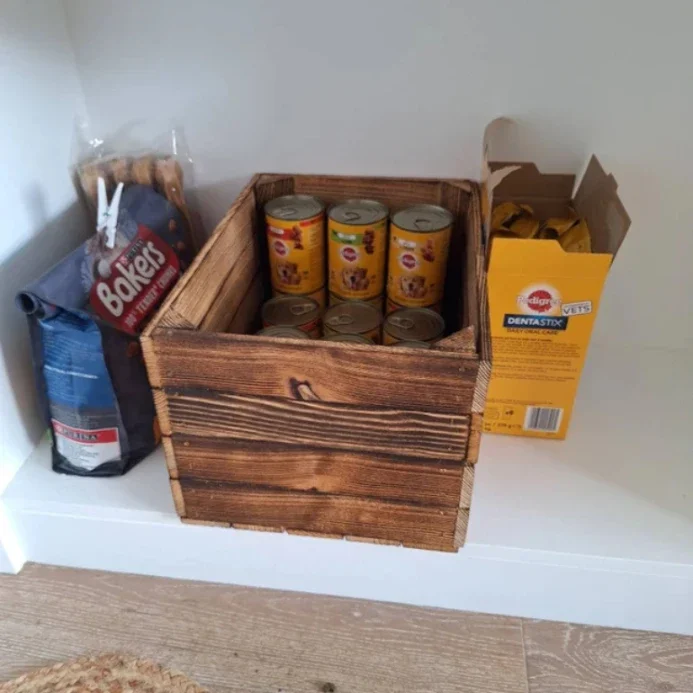
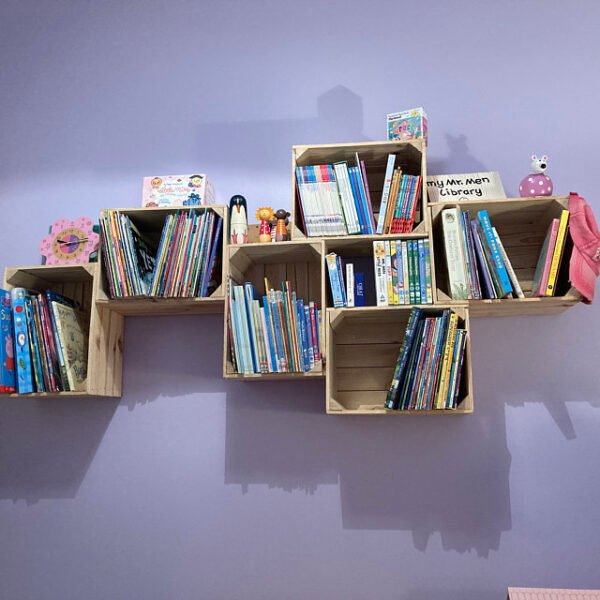
In the children’s room, containers have the toughest job: they get knocked over, dragged across the floor, and sometimes used as a step. A wooden crate stands up to this better than thin plastic, which can tear, or a fabric basket, which collapses. For small children, lower crates without lids are best – toys can be thrown in with one movement, making tidying up easier.
Cellar, attic, and garage – plastic wins here
We’ll be completely honest: if you have a damp cellar or an uninsulated attic, buy plastic containers with lids. They protect from moisture, dust, and insects, are light, and easy to label. Wood only makes sense in these places where air circulation is needed – for vegetables, apples, firewood, or preserves in jars. You can read more about storing firewood in our article on indoor firewood storage.
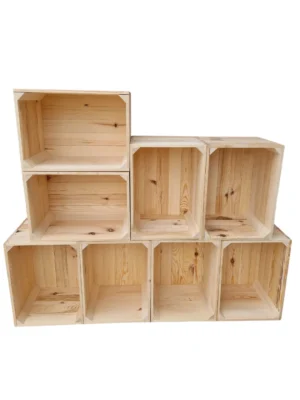
Crates for living room, pantry and children’s room


Containers with or without lids?
This is one of the most important questions – often more important than the material. A storage container with a lid protects from dust, hides the contents, and can be stacked. A container without a lid offers quick access and air circulation.
Choose a container with a lid if:
- you’re storing seasonal items that you only need once or twice a year (Christmas decorations, winter clothes, bedding),
- the container is under the bed, on top of the wardrobe, or in the attic, where dust collects,
- you want to stack containers,
- the contents don’t look good on display (cables, documents, medicines).
Choose a container without a lid if:
- you reach in daily (toys, shoes, hats, remote controls, blankets),
- the contents need air (vegetables, fruit, firewood, shoes after a walk),
- the container is on a shelf and should decorate the room,
- children are tidying up themselves – a lid is an extra step they often skip.
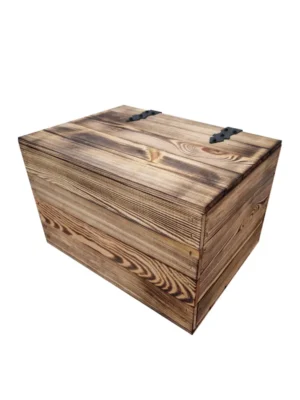
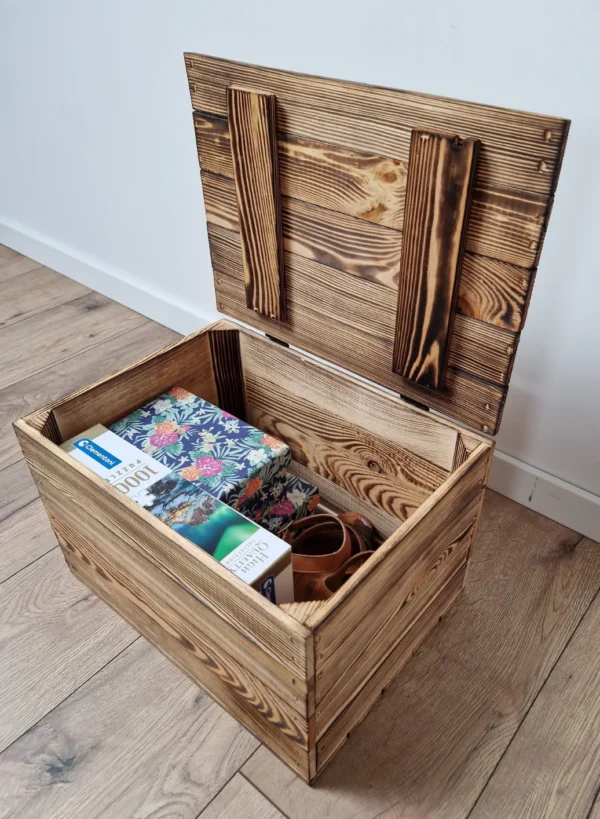
Wooden crates with lids are a good compromise: they look like a piece of furniture, protect from dust, but aren’t airtight like a plastic box with a seal. They’re suitable for bedding, blankets, toys, documents, or keepsakes. If you’re looking for something larger, see our guide to wooden bedding chests.
The right container size – measure first, then buy
A box that’s too big won’t fit on the shelf, one that’s too small wastes space. All you need is a tape measure and a piece of paper.
- Measure the space: width, depth, and height of the shelf compartment, niche, or space under the bed. Measure the inside, i.e. between the side walls, not the outside of the furniture.
- Subtract 2–3 cm: The container should be a little smaller than the space so you can pull it out easily. For containers with lids, leave extra space above – the lid needs to lift up.
- Check external and internal measurements: Product descriptions usually give external measurements. The wall thickness reduces the internal space, especially with wood.
- Measure the items you want to store: a file, a record, the largest shoes in the household, a folded blanket.
- Work out how many containers fit side by side: Sometimes two smaller boxes are more practical than one large one – they’re easier to carry and to keep tidy.
Large storage boxes – when are they useful?
Large boxes and chests are great for light, bulky items: duvets, pillows, blankets, cuddly toys, seasonal clothes. For heavy things like books, tools, or jars, it’s better to use several smaller containers – a large chest full of books is hard to move, and if you shift it often, you can easily scratch the floor.
Seasonal storage: winter clothes and Christmas decorations
Seasonal items spend most of the year unused. That’s why they need containers that protect them from dust and don’t take up everyday space.
Storage containers for clothes
Always wash clothes before storing and let them dry thoroughly – even a slightly damp jumper will develop a musty smell in a closed box. In wardrobes and dressing rooms, fabric containers with a window and wooden crates with lids work well. Under the bed – flat containers with lids. In the attic and cellar – plastic boxes with lids only, ideally with a dehumidifier.
Wool jumpers and scarves should be stored with lavender sachets or pieces of cedar wood to keep moths away.
Christmas decorations
Baubles, fairy lights, garlands, the nativity scene, and arrangements are a classic category for their own labelled container. Store fragile baubles in compartments or wrapped in paper, and wind fairy lights around a piece of cardboard to stop them tangling. If the decorations are waiting in a dry flat for Christmas, a wooden crate with a lid is practical and attractive – and in December you can use it as part of the decoration under the tree. In an unheated attic, however, choose plastic.
Labels and an order that lasts
Even the most beautiful boxes are no help if, after six months, no one remembers what’s inside. A label is the cheapest and most effective addition to any container.
- Be specific: “Chargers and cables” instead of “Electronics”; “Jumpers – winter” instead of “Clothes”.
- Label on the front: where you can see it without pulling out the container. For stacked containers, also label the side.
- For children – pictures: a drawing of building blocks or a toy car works better than writing.
- On wood: a tag on a string, a card in a wooden peg, or a chalkboard label – they leave no marks if you change the contents.
- Check once per season: When switching from summer to winter wardrobe, check the containers and get rid of anything you no longer need.
Wooden storage crates – what sizes?
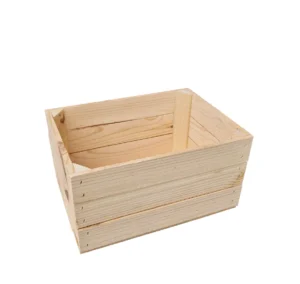
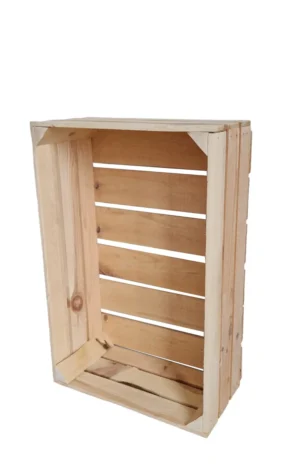
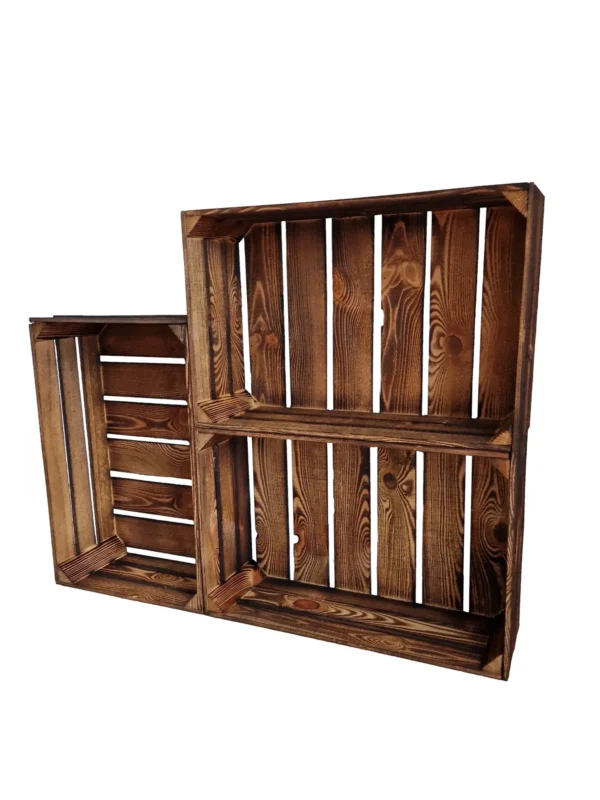
If, after looking at the tables, you decide that wooden storage crates suit your home, here’s an overview of the sizes we make in our workshop. All are made from pine, in two finishes: natural (light, sanded pine) and burnt (darker, with pronounced grain, rustic style). They’re delivered ready to use, no assembly required.
| Size | What fits inside | Best for | Price |
|---|---|---|---|
| Size30×20×15 cm | What fits insideSpices, cosmetics, chargers, sewing supplies, small toys | Best forKitchen shelf, bathroom, desk | Pricefrom €6.90 |
| Size35×25×19 cm | What fits insideHats and gloves, children’s books, remote controls, card games | Best forHallway, shelf, children’s room | Pricefrom €9.90 |
| Size39×29×24 cm | What fits insideBooks, board games, preserving jars, vegetables, shoes | Best forLiving room, pantry, hallway | Pricefrom €10.90 |
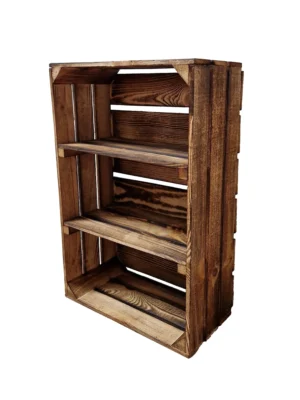
| Size50×40×30 cm | What fits insideBlankets, toys, records, firewood, potatoes | Best forLiving room, children’s room, by the fireplace | Pricefrom €10.90 |
| Size60×40×20 cm | What fits insideShoes, building blocks, seasonal clothes, flat items | Best forunder the bed (if there’s space), hallway, dressing room | Pricefrom €9.90 |
| Size39×29×25 cm with lid | What fits insideDocuments, photos, keepsakes, Christmas decorations | Best forWardrobe, shelf, bedroom | Pricefrom €23.90 |
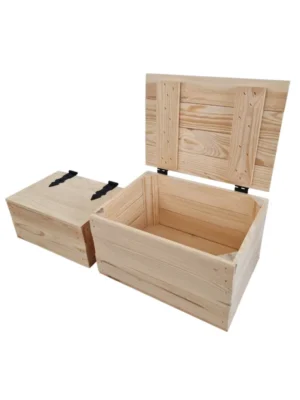
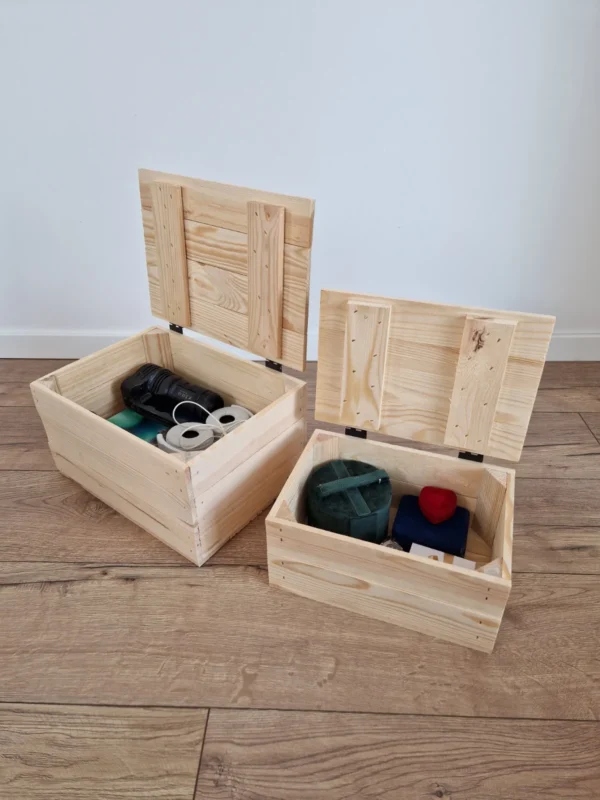
| Size2 × 30×20×16 cm with lid | What fits insideOdds and ends, jewellery, cables, stationery | Best forShelf, chest of drawers, desk | Pricefrom €55.90 (set) |
| Size33×33×39 cm with handles and lid | What fits insideToys, blankets, seasonal clothes | Best forShelf with square compartments, children’s room | Pricefrom €24.90 |
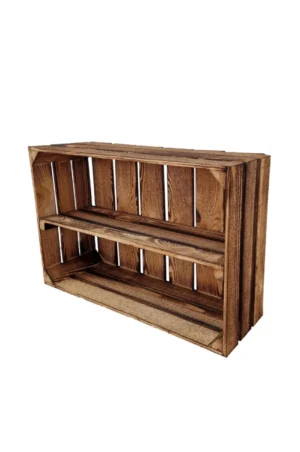
The most versatile size is 39×29×24 cm (natural and burnt) – it holds a lot and is still easy to carry. The small crates 30×20×15 cm are equivalent to storage boxes for odds and ends, and the chests 50×40×30 cm and 60×40×20 cm replace large boxes for bulky items. If you’re torn between two sizes, you’ll find more tips in the guide Which wooden crate should I choose?.
Natural or burnt?
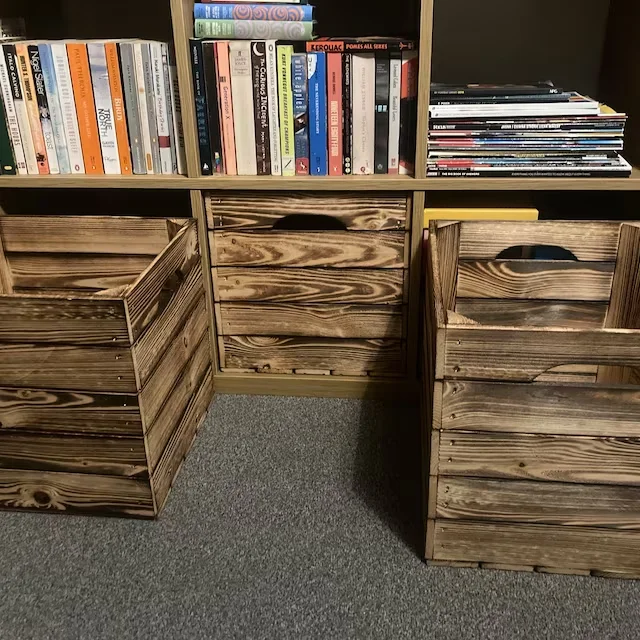
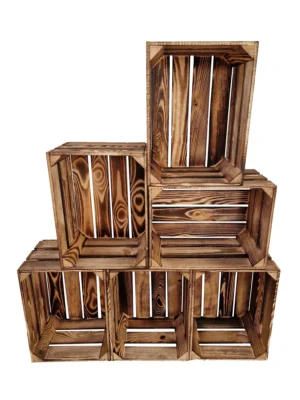
The finish is a matter of interior style. Natural pine is light, suits white furniture, Scandinavian and modern interiors, and is easy to paint or oil yourself. Burnt crates are darker with a clearly visible grain – they look good in rustic, industrial, and cosy rooms, by the fireplace, and next to dark furniture. All burnt crates and natural crates can be found in their own categories.
Storage crates – large and with lid
Crates with lids – when you need protection from dust
If you want a container with a lid that still looks like a piece of furniture, take a look at the crates with lids category. A set of two small crates 30×20×16 cm is ideal for desk and chest of drawers, the 39×29×25 cm crate for documents and keepsakes, and the 33×33×39 cm crates with handles for toys and blankets.
Small containers with lid and sets
When a wooden crate is NOT the best choice
We sell wooden crates, but we want you to be happy with your purchase for many years. So, honestly: in some situations, we don’t recommend wood.
- Damp, poorly ventilated cellar: Anything you want to protect from moisture should go in plastic with a lid.
- Uninsulated attic and garage: large temperature fluctuations and dust – plastic with a seal is more practical here.
- Directly by the shower or bath: Constant steam and water aren’t good for any wood.
- Loose food: Flour, groats, or sugar need an airtight food container.
- Very tight budget for many containers: If you need a dozen or more boxes for the cellar or a move, plastic or cardboard is cheaper.
How to order storage crates
Ordering is simple:
- Choose the size and finish (natural or burnt) – the table above or the full range in the shop will help you.
- Add the crates to your basket and proceed to checkout.
- Select the shipping method – we ship with DHL from our family workshop to anywhere in Germany. Delivery time is 2–3 working days. All details can be found on the Shipping & Delivery page.
- You’ll receive the crates ready to use, no assembly required – just unpack and place them where you want.
If you have questions about the measurements or aren’t sure which size will fit your shelf, write to us. And if you’d like to give someone the gift of organisation at home but don’t know their shelf sizes, an email gift card is ideal. Information about returns can be found on the Returns and Complaints page.
Frequently asked questions
Which storage containers are best for the cellar?
For a damp cellar, plastic containers with lids are best, ideally with a seal – they protect from moisture, dust, and insects. Wooden crates are only worthwhile there for vegetables, fruit, preserves in jars, and firewood – things that need air.
Storage boxes with or without lids?
With lid – for seasonal items, under the bed, on top of the wardrobe, and anywhere dust collects. Without lid – for things used daily (toys, shoes, blankets), and where air circulation is needed. In young children’s rooms, containers without lids are usually more practical.
Which containers are suitable for storing clothes?
In wardrobes and dressing rooms, fabric containers and wooden crates with lids work well, under the bed flat containers with lids, and in the attic and cellar plastic boxes with lids. Always wash and dry clothes before storing, and add lavender sachets to woollens.
Wicker baskets or wooden crates?
Wicker baskets are lighter and ideal for the bathroom and light items like towels or blankets. Wooden crates are more rigid and sturdy – you can stack them and put heavier things inside, such as books, shoes, or jars. Both materials look good together on a shelf.
How do I choose the right container size for a shelf?
Measure the shelf compartment inside (between the side walls), subtract 2–3 cm from the width and depth, and leave space above for containers with lids. Check if the description gives external measurements – the walls reduce the internal space of the container.
Is a wooden crate suitable for storing food?
A wooden crate is perfect for vegetables, fruit, bread in a bag, preserving jars, and bottles. Don’t pour loose foods like flour or groats directly into the crate – keep them in airtight food containers, which you can place inside the crate.
Do the crates need to be assembled?
No. Our crates are delivered ready to use, no assembly required – just unpack and place them where you want.
Conclusion: first the space, then the material
The best storage containers are those that suit the space and the contents. In a damp cellar and attic, go for plastic with a lid, in the wardrobe for light fabric baskets, in the bathroom for wicker. Where a container is on display, should last for years, and needs to breathe – in the living room, hallway, pantry, and children’s room – choose wood.
Before you buy anything, declutter, sort your things into categories, and measure your shelves. And if you decide on wooden crates, take a look at our small crates for odds and ends or the larger models from our workshop – we’re happy to help you choose the right size.

For years, she has been furnishing homes with wooden crates – from small studio flats to houses with gardens. She writes about organisation, storage and decorating ideas that work without any renovation.
All items by this author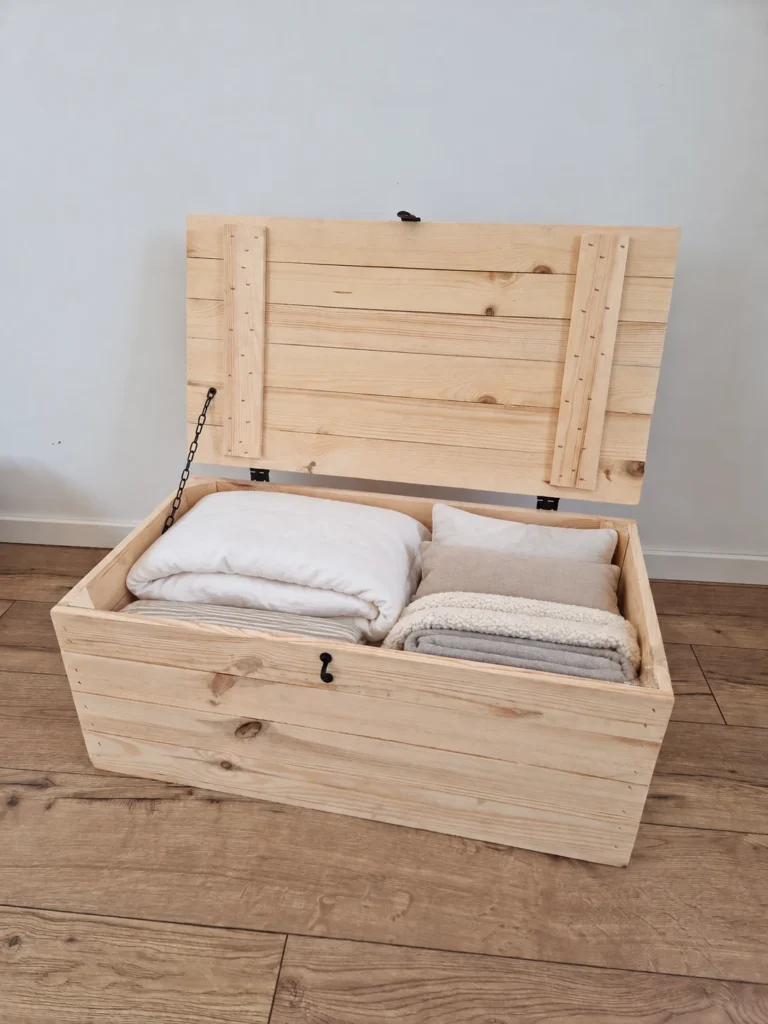







Add comment